Global buyers evaluating the 2026 Best SSS Nonwoven Machine face a practical question: which line can deliver consistent fabric quality without making production unnecessarily complex? An SSS line bonds three spunbond layers into one web. Buyers commonly assess output, fabric weight range, energy use, changeover time, and after-sales support. Small differences matter. A roll that varies in weight or tensile strength can create problems during converting and packaging.
Industry data offers useful context, but it does not select a machine for you. EDANA’s 2023 European nonwovens statistics reported production of about 2.9 million tonnes, down from the previous year. That decline is a reminder that demand and capacity utilization can shift. Smithers’ market research on global nonwovens also tracks end-use demand and production trends, helping buyers place equipment decisions within a broader market picture. Check the original reports and their definitions before comparing figures; regional totals are not global forecasts.
A careful assessment should connect those trends to the factory floor. Ask suppliers for documented line-speed conditions, sample-roll test results, utility consumption, and references from comparable plants. Inspect details such as web uniformity, winding tension, and access to maintenance points. These details are not glamorous. They are expensive when overlooked. One caveat remains: published market data cannot confirm a machine’s real performance. Buyers should verify claims through technical specifications, witnessed trials, and clear service terms. The best choice is not automatically the fastest line; it is the line that fits the product mix, operating team, and realistic demand plan.
2026 Best SSS Nonwoven Machine for Global Buyers?
What Is an SSS Nonwoven Machine and How Does It Work?
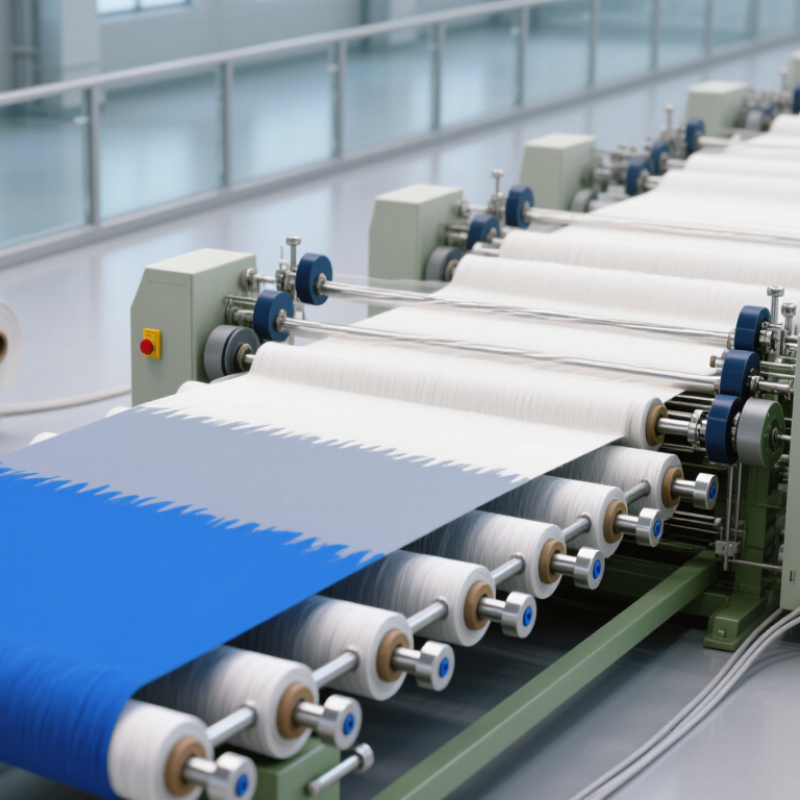
An SSS nonwoven machine forms fabric through three spunbond layers. It melts thermoplastic polymer, typically polypropylene, and pushes it through fine spinneret holes. The emerging filaments cool, stretch, and settle onto a moving belt. Three forming beams create separate web layers. A heated calender then bonds them with pressure and patterned rollers. No weaving is involved. The finished fabric is lightweight, consistent, and suited to hygiene products, medical materials, and other disposable applications.
Think of three thin webs meeting on one conveyor. The bond pattern, line speed, and temperature affect softness, strength, and thickness. Too much heat can flatten the fabric; too little may leave weak bonds. Real production needs careful adjustment, not just a high-speed line. It can be fiddly.
EDANA and INDA’s 2022 global nonwovens industry estimates put production at about 13 million tonnes, illustrating the scale and diversity of demand. That figure covers multiple nonwoven technologies, not SSS output alone. Buyers should therefore assess machine performance against their intended product, including basis weight, usable width, changeover time, and energy consumption. Requesting trial data for the target fabric is more useful than relying on headline speed. A machine may look efficient on paper and still need tuning on the factory floor.
SSS spunbond fabric is made by turning polymer granules into three continuous layers of fine filaments. The granules are melted, pushed through spinneret holes, and drawn by air into long, thin strands. These strands land on a moving belt as a loose web. Three spinning beams build the layers in sequence. Each layer can be adjusted for strength, softness, or fluid handling. Small changes matter.
Heat and pressure then bond the web between patterned rollers. This creates a stable fabric without weaving or knitting. Operators monitor temperature, line speed, and web weight; a small drift can cause weak spots or uneven thickness. The finished roll is inspected and wound for conversion into products such as hygiene items, medical disposables, and filtration media. The INDA and EDANA Global Nonwoven Markets Report 2023 puts worldwide nonwoven production at about 13.9 million tonnes in 2022. That scale makes consistency important, but volume alone does not prove quality. SSS lines can offer balanced strength and coverage, yet layer design and process control still need careful testing for each end use. The belt tells the truth. Sometimes, not perfectly.
Typical product-selection ranges for SSS spunbond fabric, shown in grams per square metre (g/m²).
SSS fabric is produced by extruding polymer into continuous filaments, drawing and laying them into three spunbond layers, then bonding the web—commonly with heated calender rolls. The ranges shown are indicative, not fixed specifications; actual basis weight depends on product design, end use, and buyer requirements.
An SSS nonwoven line should be judged by its usable output, not its highest advertised speed. Check working width, stable production speed, and the fabric weight range the line can maintain. A machine making lightweight cover stock may not handle heavier fabrics equally well. Ask for trial data across the actual products you plan to produce.
Web uniformity matters. Compare samples across the full width, checking for thin bands, uneven bonding, and visible streaks. Review the spunbond systems, filament control, and bonding calender settings together; each affects fabric consistency. Small details matter. Also confirm which polymers and filament diameters the configuration supports, rather than assuming every line offers the same flexibility.
Power consumption, changeover time, and material waste shape operating costs. Request figures from comparable production conditions, including startup and grade changes. Nominal capacity can look impressive, but steady output is what buyers need. It is worth asking how often filters, spinnerets, and other wear parts require attention. One caution: specifications rarely reveal the full maintenance burden, so discuss service access, operator training, and spare-parts availability before comparing quotations.
Global buyers comparing SSS nonwoven machines in 2026 should start with the products they actually plan to make. Check the usable fabric width, target basis-weight range, and whether the line can produce the softness, strength, and uniformity their customers expect. Ask for test rolls using the intended polypropylene grade. A neat brochure is not a production trial. Small details matter.
Compare quoted output under the same fabric specifications, not just maximum line speed. Review changeover time, energy use, waste during startup, and the controls operators will use every shift. Request recent production data and inspect sample rolls for weak edges, streaks, or uneven texture. Also clarify installation scope, spare-parts availability, training, and response times before comparing prices. These details can affect operating costs long after delivery. Not on paper.
A factory visit or live acceptance test can reveal practical issues that a specification sheet misses. For example, ask how quickly the line stabilizes after a speed change, and record the result. Some suppliers may not provide identical test conditions, so comparisons can be imperfect. Note the gaps, ask follow-up questions, and avoid treating one impressive sample as proof of consistent performance.
| Configuration or Evaluation Area | Typical Design or Use | Potential Advantages | Key Trade-Offs and Checks | Evidence to Request Before Purchase |
|---|---|---|---|---|
| Standard-width SSS line | Three spunbond beam positions form a three-layer spunbond web. Often considered for general-purpose nonwoven production. | Can offer a balance between production flexibility, line footprint, and investment level. | “Standard width” is not a universal specification. Confirm usable fabric width, edge-trim allowance, target basis-weight range, and intended product mix. | Approved technical specification, finished-web width definition, product samples, and a witnessed trial using the buyer’s target materials and settings. |
| Wide-width SSS line | Uses a wider web-forming and handling system for applications requiring broader rolls or higher output per production pass. | May increase output per unit of operating time when the product, downstream converting equipment, and market demand support the wider web. | Wider equipment can require more floor space, larger handling systems, and suitable downstream equipment. Confirm edge quality and uniformity across the full usable width. | Factory layout, usable-width guarantee, cross-directional weight-uniformity test method, roll-handling plan, and downstream compatibility details. |
| Higher-output SSS line | Designed around a higher production target, which may involve higher operating speed, wider width, or a combination of design choices. | Can support greater production volume when the line sustains the required quality and operating availability. | Do not compare maximum speed alone. Output also depends on fabric width, basis weight, product specifications, downtime, and changeover frequency. | Guaranteed output at a named product specification, test duration, acceptance criteria, utility consumption, and a written definition of operating availability. |
| Flexible product-mix SSS line | Configured to run a range of product specifications through recipe settings, process controls, and compatible winding or finishing equipment. | May suit producers serving multiple applications or changing customer requirements. | Flexibility depends on the actual changeover process and the line’s tested operating window; it should not be assumed from a control-system feature list. | Demonstration of representative product changes, changeover time, start-up waste, recipe-management functions, and sample rolls from each target specification. |
| Hygiene-oriented SSS line | Specified for hygiene-related products where web consistency, cleanliness, roll quality, and stable converting performance are important. | Can be tailored to the buyer’s product requirements and quality-control procedures. | “Hygiene grade” is not a standalone performance guarantee. Verify the required product properties, cleanliness controls, and applicable customer or regulatory requirements. | Quality-control plan, inspection and contamination-control procedures, traceability details, and test results for agreed product specifications. |
| Polymer and feeding system | Spunbond lines commonly process thermoplastic polymer resin; polypropylene is a common material for spunbond applications. | Material and feeding choices can be matched to the intended product and supply chain. | Confirm resin grades, additive or masterbatch compatibility, drying or handling requirements where applicable, and material-change procedures. | Approved material list, processing conditions, feeding-system specification, and trial results with the buyer’s intended resin and additives. |
| Spinning, web formation, and bonding | An SSS line uses three spunbond beam positions to form layers; the resulting web is typically consolidated using a bonding process such as thermal calender bonding. | Layer formation and bonding settings can be selected to meet agreed fabric properties. | Beam count alone does not determine final fabric performance. Check layer uniformity, bonding quality, and the properties required by the end application. | Process-flow diagram, equipment list, bonding-system details, product-property test reports, and a production trial against agreed acceptance limits. |
| Controls, maintenance, and support | Compare automation, alarm and data functions, maintenance access, operator training, and the availability of technical support. | Clear documentation and maintainable equipment can support more consistent operation and planned servicing. | Control-system descriptions do not establish actual uptime. Consider local service coverage, spare-parts lead times, training language, and remote-support arrangements. | Control-system scope, maintenance schedule, recommended spare-parts list, training plan, warranty terms, and service-response commitments. |
| Energy, utilities, and installation | Assess electrical load and other utility requirements alongside line layout, building conditions, and installation scope. | Early review can help buyers estimate site readiness and operating costs more accurately. | Consumption figures depend on line configuration, product, operating conditions, and site utilities. Compare figures using the same production basis. | Utility-load schedule, consumption assumptions, foundation and layout drawings, installation responsibilities, and commissioning plan. |
| Commercial comparison | Compare total project scope rather than equipment price alone, including installation, commissioning, training, spares, and after-sales service. | A scope-based comparison makes quotations easier to evaluate across different suppliers and configurations. | Check exclusions, payment milestones, delivery terms, acceptance tests, warranty coverage, and any required local compliance documentation. | Itemized quotation, scope-of-supply list, delivery schedule, acceptance-test protocol, warranty statement, and service terms. |
Before purchasing an SSS nonwoven machine, define the fabric you need to make: basis weight, width, polymer type, and intended application. Ask suppliers for trial results using comparable raw material, not only rated output. Check web uniformity, edge stability, and roll quality across several production speeds. Small defects matter. A 2024 Fortune Business Insights report estimated the global nonwoven fabric market at about USD 53.52 billion in 2023, but market growth alone does not guarantee demand for a specific product or line.
Review the complete line layout before installation. Confirm floor loading, machine dimensions, access for maintenance, power supply, compressed air, cooling water, and exhaust requirements with qualified site engineers. Request a utility-consumption estimate at defined operating conditions; figures without test conditions are hard to compare. Check whether the quotation includes commissioning, operator training, spare parts, and acceptance criteria. ISO 9001 certification can indicate a quality management system, but it does not prove that a machine will meet your output target.
Ask for documentation on safety guarding, emergency stops, electrical drawings, and maintenance intervals. Verify that local technicians can service critical components and that replacement parts have realistic lead times. For the factory acceptance test, agree on measurable criteria such as line speed, product weight variation, and stable running time. Paperwork helps, yet actual production trials matter more. One point buyers sometimes overlook: a faster line may increase waste during changeovers, so compare saleable output, not headline speed.
Check usable width, stable production speed, and the basis-weight range. Maximum speed alone can mislead.
Inspect samples across the full width. Look for thin bands, streaks, uneven bonding, and weak edges. Small details matter.
Yes. Request trial rolls made with the polypropylene grade and fabric specifications you plan to use. A brochure is not a production trial.
Compare output under matching fabric conditions, not just quoted maximum speeds. Ask how quickly output stabilizes after speed changes.
Ask for comparable figures on energy use, changeover time, and startup waste. These costs can be easy to underestimate.
Ask how often filters, spinnerets, and other wear parts need attention. Confirm service access and spare-parts availability.
Clarify installation scope, operator training, and expected service response times. A low quotation may leave gaps.
No. Review several samples or production records under clear test conditions. Comparisons may still be imperfect, so note what was not tested.
Choosing the best Sss Nonwoven Machine in 2026 starts with understanding how its three spunbond layers are formed, bonded, and combined into a consistent fabric. A clear overview of the production process helps buyers assess how each stage may affect fabric strength, uniformity, softness, and output. Key specifications to compare include production speed, usable fabric width, material compatibility, automation, energy use, and the ability to maintain stable quality across different product requirements.
Global buyers should compare machine options against their planned capacity, target fabric applications, available factory space, and long-term operating needs—not just the initial purchase price. Before buying or installing a machine, confirm the scope of supply, technical documentation, operator training, maintenance support, installation requirements, and commissioning plan. Careful evaluation of these factors can help buyers select equipment that fits their production goals and supports reliable operation over time.

HG NONWOVEN