Choosing Spunbond Non Woven Fabric in 2026 requires more than comparing prices or touching a soft sample. The right material must match its final use, production process, environmental demands, and expected service life. As Dr. Behnam Pourdeyhimi, a leading nonwoven materials researcher, has stated, “Nonwovens are the most versatile materials on earth.” That versatility creates opportunity, but it also creates confusion.
This guide examines polypropylene, polyester, and biodegradable fiber options through practical performance details. It considers basis weight, tensile strength, elongation, air permeability, hydrostatic resistance, softness, and thermal bonding behavior. A 25-gram fabric may suit a garment cover, while a heavier 80-gram structure could support filtration or construction applications. Small differences matter. A fabric that feels strong in a warehouse may stretch during converting. Another may look uniform but lose performance after heat exposure or moisture contact.
Supplier assessment matters equally. Request technical data sheets, batch samples, test reports, and traceability information. Confirm whether the supplier can maintain stable GSM and roll width across repeated orders. Ask how they manage edge defects, contamination, and uneven bonding. Do not accept impressive claims too quickly. “Premium” is not a measurable specification.
This article also recognizes an uncomfortable limitation. No single Spunbond Non Woven Fabric can satisfy every application. Cost, durability, sustainability, and processing speed often compete. The best decision may still involve compromise. Careful testing reduces that risk. Real performance appears after conversion, handling, storage, and use—not only under showroom lighting.
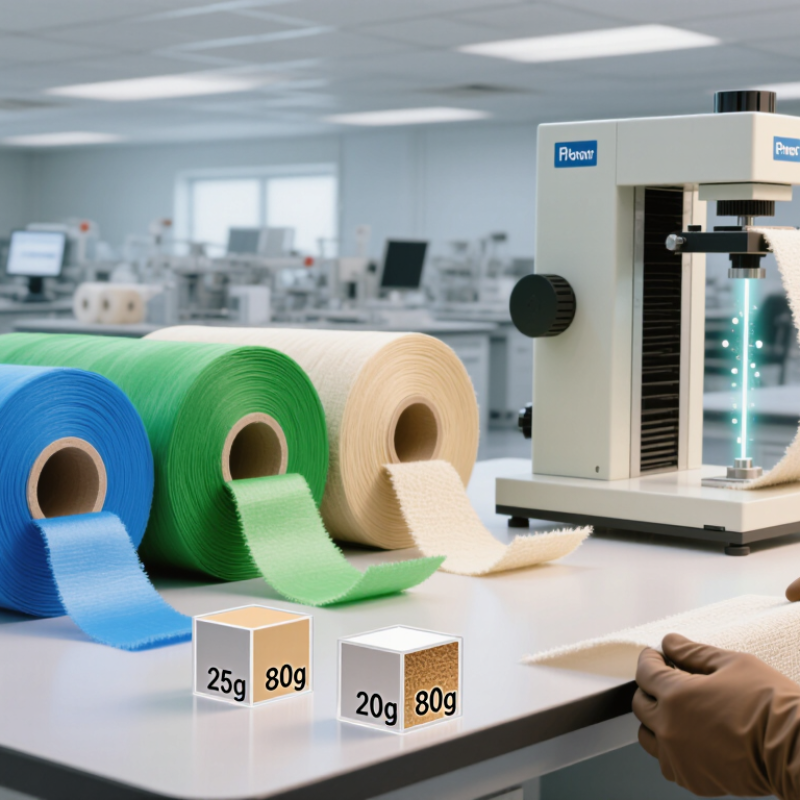
Spunbond nonwoven fabric is a continuous web of polymer filaments. It is not woven or knitted. Polypropylene is common, while polyester and biodegradable polymers serve special applications. Production begins by melting polymer chips. The melt passes through a spinneret with many tiny holes. Cooling air stretches the filaments into long, thin strands. These strands fall onto a moving belt and form a loose web. Heat, pressure, or chemical bonding then gives the web strength. The process is fast, clean, and highly adjustable. Smithers’ The Future of Global Nonwovens to 2029 values the 2024 global market at about US$58.1 billion. EDANA statistics also identify hygiene and medical products as major nonwoven application areas.
When choosing fabric in 2026, check weight, tensile strength, elongation, softness, pore size, and bonding quality. A 25 gsm sheet may suit a lightweight cover, but it may fail under repeated pulling. Heavier fabric is not automatically better. I have seen buyers focus on grammage and overlook fiber uniformity. That mistake can create weak spots. Ask for test data under the intended humidity and temperature. Also verify roll width, color stability, odor, and batch consistency. Recycled content can help sustainability, but it may affect strength or appearance. The choice is rarely perfect.
Material choice should follow the working environment. Polypropylene is lightweight, economical, and resistant to moisture, making it suitable for bags, agricultural covers, and disposable applications. Polyester offers better dimensional stability and heat resistance, but it may cost more. For products near heat or repeated handling, polyester can be the safer option. Check fiber content and production records before ordering.
Weight means basis weight, measured in grams per square meter (GSM). Light fabric may work for dust covers, liners, or simple packaging. Medium weights provide better tear resistance and shape retention. Heavier fabric feels stronger, but strength does not increase equally in every direction. Test both machine direction and cross direction. A 30 GSM sample may appear adequate, yet fail after folding or stitching. Lower weight is not always efficient.
Width should match the cutting layout, equipment, and finished product. Measure the usable width, not only the roll width. Include edge trimming, folding, and possible shrinkage. Ask for a sample roll when tolerances are tight. A practical trial should record GSM, width, tensile strength, air permeability, and shrinkage after processing. Small variations can affect automatic feeding. This is often overlooked. I would also compare two nearby GSM options, because the cheapest specification can create more waste during conversion.
Strength, stretch, and barrier performance should match the product’s real working conditions. A heavier fabric often provides higher tensile strength, but weight alone cannot guarantee durability. Check machine-direction and cross-direction results separately. A packaging sleeve may face pulling along one direction and tearing across the other. For nursery covers or protective wraps, moderate strength may be enough, while repeated handling demands stronger fibers and better seam resistance.
Strength, stretch, and barrier performance should match the product’s real working conditions.
Stretch changes how the fabric fits and recovers. High elongation can help a cover follow curved surfaces without splitting. However, excessive stretch may reduce dimensional stability during cutting or heat exposure. Ask for elongation and recovery data, not only tensile strength. Barrier performance also needs careful comparison. Fine pores, higher basis weight, and suitable treatments can improve resistance to dust, droplets, or light moisture. Yet a fabric that blocks moisture too well may trap heat and condensation.
In practical trials, I place samples over sharp corners, apply gentle pulling, and expose them to controlled moisture. Then I inspect pinholes and permanent deformation. Simple testing reveals problems quickly. Laboratory data should follow recognized methods, such as ISO or ASTM procedures, with clear temperature and humidity conditions. I once selected a fabric based on impressive strength figures, but its weak cross-direction stretch caused tearing around the seam. The mistake was trusting one number. Real use is less tidy. Samples should be tested after storage, folding, and processing, because performance can change before installation.
Choosing spunbond nonwoven fabric in 2026 starts with the application, not the lowest quoted price. A disposable hygiene layer may need soft polypropylene, low lint, and controlled basis weight. A crop cover needs sunlight resistance, airflow, and enough tear strength for wind. Construction membranes demand stronger tensile performance and stable dimensions. Small details matter.
According to Grand View Research, the global nonwoven fabrics market was valued at about USD 53.5 billion in 2023 and is projected to grow at roughly 7.2% annually through 2030. That growth does not make every fabric suitable. Ask for test data: basis weight, tensile strength, elongation, air permeability, hydrostatic pressure, and UV resistance. For filtration, check pore structure and pressure drop. For medical use, review barrier performance, cleanliness, and sterilization compatibility. “Medical grade” alone is not a technical specification.
Production experience shows that resin choice changes performance. Polypropylene offers low weight and cost, while polyester can provide better heat and dimensional stability. Additives may improve UV life, but they can affect softness or recyclability. The balance is rarely perfect. EDANA reported European nonwoven production of approximately 3.08 million tonnes in 2023, showing the scale of a mature but demanding industry. Before approval, test fabric from the actual production lot, not only a laboratory sample. A good match survives its real environment.
Match the fabric’s basis weight to the intended application. The ranges below represent typical commercial spunbond polypropylene specifications; final selection should also consider strength, breathability, hydrostatic resistance, softness, and required certifications.
How to read the chart: Lower basis weights improve softness, flexibility, and air permeability, while higher basis weights generally provide greater coverage, durability, and load-bearing performance.
How to Choose Spunbond Non Woven Fabric in 2026?
What Quality, Sustainability, and Cost Factors Matter in 2026?
A reliable spunbond fabric starts with measurable quality, not a glossy sample. Check basis-weight variation across the roll, tensile strength, elongation, tear resistance, and air permeability. ISO 9073 test methods help compare suppliers consistently. For medical, agricultural, or packaging use, match these results with real loading conditions. A fabric that feels strong may still split around seams or weaken after storage. I have seen attractive rolls fail because edge density changed visibly.
Sustainability now requires evidence. Textile Exchange’s Materials Market Report 2024 estimates global fiber production reached 124 million tonnes in 2023 and could reach 160 million tonnes by 2030. That growth makes recycled content important, but recycled polymer is not automatically the greener option. Ask for recycled-content percentages, chain-of-custody documents, energy data, and end-of-life guidance. Also inspect color variation and filtration performance. These can shift when recycled feedstock changes. The uncomfortable truth: “eco-friendly” claims often hide incomplete data.
Tips: Request three production-lot samples, not one. Compare basis weight, roll length, defects, and test results. Calculate cost per usable square meter, including waste, transport, and rejected rolls. A cheaper fabric can become expensive after conversion losses. Ask for recent third-party test reports, but do not treat paperwork as proof of field performance. Trial the material in your actual machine, humidity, and storage conditions. Small tests expose large assumptions.
Quality, sustainability, and cost comparison for common spunbond material options. Values are indicative purchasing ranges and must be verified against the final grade, construction, and test method.
| Material Option | Typical Basis Weight | Typical Tensile Strength Machine / Cross Direction |
Typical Elongation Machine / Cross Direction |
Typical Air Permeability | Moisture & Heat Performance | End-of-Life Profile | Indicative Cost Index* | Best-Fit Applications | Quality and Sustainability Risk to Check | Overall 2026 Fit |
|---|---|---|---|---|---|---|---|---|---|---|
| Virgin Polypropylene (PP) | 10–150 g/m² | 25–80 N/5 cm 15–65 N/5 cm |
30–100% 50–150% |
Approx. 500–4,000 L/m²/s at 200 Pa, depending on basis weight and bonding | Low moisture absorption; useful in hygiene, packaging, agriculture, and medical barrier constructions. Softening and dimensional performance depend on grade and process. | Technically recyclable where collection and sorting systems accept non woven PP. Not biodegradable; contamination and low product weight can limit recovery. | 100 | General-purpose bags, hygiene components, furniture backing, crop covers, protective packaging, and medical constructions | Confirm basis-weight uniformity, web strength, bonding pattern, linting, odor, additives, and compliance with the intended product-contact regulations. | High |
| Post-Consumer or Post-Industrial Recycled PP | 15–180 g/m² | 20–70 N/5 cm 12–55 N/5 cm |
25–90% 40–130% |
Approx. 450–3,800 L/m²/s at 200 Pa | Similar moisture resistance to virgin PP. Mechanical performance may be more variable because of feedstock history and filtration quality. | Supports recycled-content targets and reduces demand for virgin polymer. Recyclability depends on polymer purity, color, laminations, labels, and local infrastructure. | 85–110 | Reusable shopping bags, packaging, construction layers, furniture components, and applications where controlled recycled content is acceptable | Request recycled-content evidence, contamination limits, lot-to-lot variation data, odor testing, color consistency, and tensile retention after processing. | High |
| Polyester (PET) | 15–200 g/m² | 30–100 N/5 cm 20–85 N/5 cm |
20–70% 30–100% |
Approx. 300–3,000 L/m²/s at 200 Pa | Low moisture absorption and good dimensional stability. Generally offers higher heat resistance than PP, subject to the selected polymer and bonding process. | Recyclable in established polyester streams; recycled PET can reduce virgin feedstock demand. It is not biodegradable, and mixed-material laminates complicate recovery. | 110–160 | Filtration support, automotive interiors, roofing and construction layers, geotextiles, and high-strength technical fabrics | Check fiber migration, hydrolysis resistance, UV stabilizer performance, thermal shrinkage, and compatibility with coatings or laminates. | High |
| Recycled PET | 15–200 g/m² | 28–95 N/5 cm 18–80 N/5 cm |
18–65% 28–95% |
Approx. 280–2,900 L/m²/s at 200 Pa | Good dimensional stability and heat performance for many technical uses. Processing history can affect viscosity, strength, and consistency. | Provides a clear recycled-content pathway when supported by traceable feedstock and suitable collection systems. Mechanical recycling remains sensitive to contamination and product design. | 105–150 | Automotive, construction, filtration, acoustic products, and durable technical applications | Verify chain-of-custody documentation, recycled-content percentage, melt-flow consistency, odor, color, and heavy-metal or restricted-substance compliance. | High |
| Polylactic Acid (PLA) | 15–120 g/m² | 20–65 N/5 cm 12–55 N/5 cm |
15–60% 25–90% |
Approx. 400–3,200 L/m²/s at 200 Pa | Lower heat resistance than PET and many PP grades. Hydrolysis, humidity, processing temperature, and service conditions require careful control. | Industrial compostability may be possible only under specified conditions and certifications. It is not automatically compostable in home composting or ordinary landfill conditions. | 140–220 | Selected agricultural, packaging, filtration, and disposable applications where certified industrial composting is available | Confirm compostability certification for the complete product, not only the polymer. Check service temperature, moisture exposure, shelf life, and local end-of-life capability. | Medium |
| PP/PE or Multi-Polymer Composite | 20–180 g/m² | 25–85 N/5 cm 15–70 N/5 cm |
30–110% 45–160% |
Approx. 400–3,500 L/m²/s at 200 Pa | Can combine softness, sealability, strength, or barrier properties. Performance depends strongly on layer ratio, bonding, and any coating. | May be difficult to recycle if polymers cannot be separated or if coatings, adhesives, and additives are present. Single-polymer designs are generally easier to manage. | 105–145 | Heat-sealable packaging, protective covers, hygiene products, and engineered laminates | Request a complete material composition, layer structure, seal-window data, delamination resistance, and an end-of-life assessment for the finished article. | Medium |
Polypropylene is lightweight, moisture-resistant, and usually economical. It suits bags, agricultural covers, liners, and disposable products. Polyester offers better heat resistance and dimensional stability. Choose polyester near heat or during repeated handling. Check fiber content and production records before ordering.
GSM means grams per square meter. Lower GSM fabric suits dust covers, liners, and simple packaging. Medium GSM usually improves tear resistance and shape retention. Heavier fabric feels stronger, but strength may differ by direction. Lower weight is not always cheaper.
Match the width with your cutting layout, machine, and finished product. Measure usable width, not only roll width. Allow space for trimming, folding, and shrinkage. Request a sample roll when tolerances are tight. Small width changes can interrupt automatic feeding.
Yes. A sleeve may experience pulling lengthwise and tearing across its width. Test tensile strength in both directions. Also check seam resistance after stitching or folding. I once trusted one impressive strength result. The seam still failed.
Higher elongation helps fabric fit curved surfaces without splitting. Excessive stretch can reduce cutting accuracy and dimensional stability. Ask for elongation and recovery data. Do not judge stretch by touch alone. It can feel fine, then deform after heat exposure.
Fine pores, higher GSM, and suitable treatments can improve resistance to dust and light moisture. Excessive moisture blocking may trap heat and condensation. Place samples over sharp corners and apply controlled moisture. Inspect pinholes and permanent deformation afterward. Simple tests reveal problems quickly.
Request three samples from separate production lots. Compare GSM, usable width, roll length, defects, tensile strength, elongation, and air permeability. Review recent third-party test reports. Paperwork helps, but it does not prove machine performance. Trial the fabric under real humidity and storage conditions.
Ask for recycled-content percentages, traceability documents, energy data, and end-of-life guidance. Recycled content does not automatically mean lower environmental impact. Calculate cost per usable square meter, including waste, transport, and rejected rolls. The cheapest specification may create more conversion waste. My earlier estimate missed this.
Choosing the right Spunbond Non Woven Fabric in 2026 requires understanding how it is produced and how its structure affects performance. Made by extruding and continuously bonding thermoplastic filaments, spunbond fabric offers a practical balance of strength, lightness, breathability, and flexibility. The best choice depends on the material type, fabric weight, roll width, and required dimensions. Different combinations can influence tensile strength, elongation, tear resistance, softness, and barrier performance, so specifications should be matched carefully to the intended use.
Application requirements should guide every purchasing decision, whether the fabric is needed for packaging, agriculture, filtration, hygiene products, construction, or protective covers. Buyers should also evaluate consistency, surface quality, bonding uniformity, color stability, and production reliability. In 2026, sustainability is increasingly important, making recyclable materials, efficient manufacturing, reduced waste, and responsible sourcing valuable considerations. Finally, total cost should include not only the purchase price, but also processing efficiency, durability, storage, transportation, and product performance over time.

HG NONWOVEN