Tnt Nonwoven Fabric is a practical material built without traditional weaving or knitting. Instead, fibers are bonded through heat, pressure, chemicals, or mechanical action. In many commercial products, the term refers to lightweight spunbond polypropylene fabric. It may appear in shopping bags, medical gowns, agricultural covers, furniture backing, and disposable packaging. The surface can feel smooth, slightly rough, or soft like paper.
Behnam Pourdeyhimi, a respected nonwovens researcher and former executive director of The Nonwovens Institute, describes the basic idea clearly: “Nonwovens are engineered fibrous assemblies that are neither woven nor knitted.” This statement explains why Tnt Nonwoven Fabric can offer different performance from ordinary cloth. Its fiber layout supports breathability, liquid resistance, filtration, cushioning, or strength, depending on production choices. Small changes matter. Fiber size, bonding temperature, and web density can change the final result.
The material is not automatically sustainable. That point deserves attention. Some Tnt Nonwoven Fabric products use recycled fibers or bio-based polymers, while others are difficult to recycle after contamination or mixed-material processing. Buyers should examine weight, tensile strength, air permeability, and end-use safety instead of trusting appearance alone. A thin white sheet may look simple, but its performance comes from careful engineering.
This article explores how Tnt Nonwoven Fabric is made, where it is used, and how to select it responsibly. Real-world results may vary. Suppliers, testing conditions, and application requirements always matter.
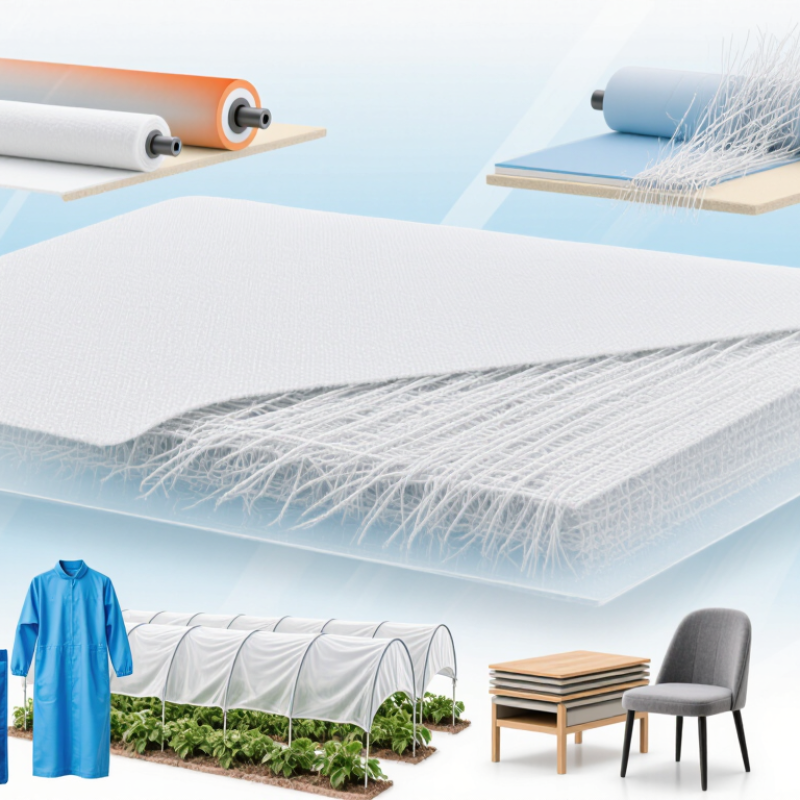
TNT nonwoven fabric is a textile made without weaving or knitting yarns. TNT commonly means “tecido não tecido” or “tessuto non tessuto,” depending on the market. In English, professionals usually call it nonwoven fabric. Manufacturers form fibers into a loose web, then bond them with heat, pressure, adhesives, or mechanical entanglement. Common fibers include polypropylene, polyester, viscose, and cotton. The final sheet can feel soft like tissue or firm like thin board.
The structure controls performance. Tiny pores may support filtration and breathability, while dense layers can improve liquid resistance. In practical use, TNT appears in hygiene products, medical gowns, agricultural covers, packaging, insulation, and household wipes.
Grand View Research estimated the global nonwoven fabric market at about USD 53.7 billion in 2023, with continued growth expected through 2030. The report also identifies hygiene, healthcare, and construction as important demand areas.
However, market figures differ by product definition and region. That detail matters. A disposable medical sheet and a durable construction membrane are both nonwovens, but they require different tests, fiber blends, and bonding methods.
Some descriptions make TNT sound universally sustainable. They are not. Environmental performance depends on fiber origin, product lifespan, additives, and disposal infrastructure. Testing for tensile strength, air permeability, liquid resistance, and skin contact remains essential before selecting a grade.
TNT nonwoven fabric, often called textile nonwoven fabric, is made without weaving or knitting yarns. Its manufacturing route determines strength, softness, breathability, and end use. The process usually begins with polymer pellets or prepared fibers. These materials are melted, extruded, or opened into individual strands. The strands then form a loose web on a moving surface.
Manufacturers control web thickness, fiber direction, temperature, and production speed. Bonding may use heat, pressure, liquid binders, or needle punching. In spunbond production, continuous filaments are stretched and laid randomly before thermal bonding. Meltblown production uses fine air streams to create much smaller fibers. Some structures combine both methods. That choice changes filtration, drape, and tear resistance.
The material may then receive cutting, embossing, printing, or water-repellent treatment. Quality teams check weight, thickness, tensile strength, air permeability, and surface defects. No process is flawless. A slight temperature shift can create weak spots or uneven texture.
Tips: Ask for the fabric’s production method, weight, fiber type, and test results. Match these details to the intended application, not only its appearance. Store rolls in a clean, dry area, away from heat and direct sunlight. Check a sample after converting, because cutting and sealing can expose weaknesses.
TNT nonwoven fabric is made by bonding fibers instead of weaving them into yarns. “TNT” often means tessuto non tessuto, or nonwoven fabric. Its properties depend on fiber type, bonding method, and finishing treatment.
It is usually lightweight and easy to cut, fold, and shape. The open fiber structure can provide useful breathability. That matters in disposable gowns, hygiene products, packaging, and protective covers. Some grades resist water, while others absorb liquids quickly. Do not assume every TNT fabric is waterproof. That distinction matters.
TNT fabric can offer good tear resistance for its weight, especially when fibers are thermally or mechanically bonded. Its smooth surface also supports clean printing and consistent cutting. Many sheets show stable thickness across a roll, which helps automated production. Not always. Uneven bonding may create weak spots near the edges.
From practical handling, the fabric often feels soft but slightly dry against the fingers. A denser sheet may block particles better, yet it can reduce airflow. A softer sheet may improve comfort but lose strength when wet. Testing should include tensile strength, air permeability, liquid penetration, thickness, and dimensional stability. Visual inspection alone is unreliable. I have found that small changes in fiber blend or heat can noticeably change performance. Specification sheets are helpful, but real-use trials still deserve attention.
| Property or Dimension | What It Means | Typical Characteristics | Practical Applications |
|---|---|---|---|
| Definition | TNT commonly refers to “tessuto non tessuto,” an Italian term meaning “nonwoven fabric.” It is a sheet made from fibers or filaments that are bonded mechanically, thermally, chemically, or through a combination of these methods rather than being woven or knitted. | Fiber web or continuous-filament structure; no conventional warp and weft. | Textiles, packaging, hygiene products, filtration, agriculture, furniture, construction, and medical-related products. |
| Common Fiber Materials | The fiber type influences strength, softness, moisture behavior, heat resistance, and end-of-life options. | Polypropylene, polyester, viscose, polyethylene, polyamide, cotton, wood pulp, and blended fibers. | Polypropylene for lightweight products; polyester for durability; viscose and pulp for absorbency; blends for balanced performance. |
| Manufacturing Methods | Nonwoven webs can be formed from short fibers or continuous filaments and then bonded to create the required structure. | Spunbond, meltblown, staple-fiber needlepunch, thermal bonding, wet-laid, and hydroentangled processes. | Spunbond for strong lightweight sheets; meltblown for fine-fiber filtration; needlepunch for thick and resilient materials. |
| Basis Weight | Basis weight is the mass of fabric per unit area and is commonly used to compare lightweight and heavy nonwoven constructions. | Often specified in grams per square metre (g/m²). Typical products may range from approximately 10 to over 500 g/m², depending on construction. | Low basis weights for wipes and disposable covers; higher basis weights for geotextiles, padding, and durable technical products. |
| Strength and Tear Resistance | Strength depends on fiber type, bonding method, basis weight, web orientation, and whether the fabric is reinforced or laminated. | Properties may differ in the machine direction and cross direction; continuous filament structures often provide good tensile uniformity. | Protective covers, carrier bags, wrapping materials, roofing components, automotive parts, and geotextile layers. |
| Air Permeability | The open structure of many nonwovens allows air to pass through. Airflow is controlled by fiber diameter, pore size, density, and laminations. | Can range from highly breathable to comparatively low-permeability, depending on the material and finishing process. | Hygiene backsheet materials, filtration media, medical gowns, agricultural covers, insulation, and breathable packaging. |
| Liquid Behavior | Nonwoven fabrics may be hydrophilic, hydrophobic, absorbent, or liquid resistant after fiber selection and finishing. | Polypropylene and polyester are naturally low-absorbency fibers; viscose, pulp, and specific finishes can improve liquid uptake. | Absorbent wipes, disposable hygiene cores, fluid barriers, filtration, spill-control products, and medical drapes. |
| Softness and Drape | Surface feel and flexibility are influenced by fiber fineness, bonding, density, embossing, and finishing treatments. | Can be engineered from soft and conformable to firm and dimensionally stable. | Personal-care products, wipes, apparel interlinings, bedding components, furniture coverings, and disposable garments. |
| Thermal Performance | Thermal behavior depends mainly on the polymer, fabric thickness, porosity, and bonding temperature. Some nonwovens can be thermally bonded or heat laminated. | Polypropylene softens and melts at a lower temperature than polyester; exact performance varies by grade and construction. | Thermal-bonded products, insulation layers, composite laminates, automotive components, and protective packaging. |
| Chemical Resistance | Resistance to acids, alkalis, solvents, oils, and cleaning agents varies with the fiber polymer, concentration, temperature, and exposure time. | Polypropylene generally offers good resistance to many dilute chemicals; compatibility must be verified for each application. | Industrial wipes, filtration, chemical packaging, laboratory materials, and protective liners. |
| Dimensional Stability | Dimensional stability describes how well the fabric maintains its size and shape during handling, moisture exposure, and temperature changes. | Improved through suitable bonding, calendering, laminating, or reinforcement; some structures may stretch or shrink when heated. | Medical covers, roofing membranes, automotive trim, furniture substrates, labels, and composite materials. |
| Barrier Capability | Nonwovens can provide a barrier against particles, droplets, dust, or liquids when designed with appropriate fiber fineness, density, coatings, or multilayer construction. | Barrier performance is application-specific and should be verified through standardized tests rather than inferred from fabric appearance. | Protective apparel, hygiene products, filtration media, packaging liners, construction membranes, and medical-related products. |
| Weight and Material Efficiency | Nonwoven production can create functional sheets with relatively low mass, especially when strength, softness, or filtration is achieved through engineered fiber structures. | Lightweight designs are available, but actual material efficiency depends on the required strength, thickness, and service life. | Disposable products, lightweight packaging, transport covers, insulation, and automotive interior components. |
| Customization Options | Performance can be adjusted by changing fiber composition, web formation, bonding, color, embossing, coating, lamination, and surface treatment. | Available in different colors, thicknesses, textures, pore structures, widths, and functional finishes. | Product-specific solutions for hygiene, filtration, agriculture, packaging, construction, furniture, and technical textiles. |
| Sustainability Considerations | Environmental performance depends on raw materials, production energy, product lifetime, additives, contamination, and available recycling systems. | Some products use recycled or renewable fibers; many multilayer or contaminated products are difficult to recycle. | Reusable technical textiles, recycled-content products, durable components, and applications designed for reduced material consumption. |
| Quality-Control Measures | Tests should be selected according to the intended application and may evaluate physical, mechanical, barrier, absorbency, or aging performance. | Common measurements include basis weight, thickness, tensile strength, tear strength, air permeability, water resistance, and absorbency. | Product qualification, incoming-material inspection, process control, and compliance verification. |
Note: The performance of TNT nonwoven fabric varies significantly according to fiber composition, basis weight, bonding method, finishing, and product design. Typical characteristics should be confirmed with application-specific test data.
TNT nonwoven fabric is made by bonding fibers without traditional weaving or knitting. The result is lightweight, breathable, and often resistant to moisture. Depending on its fiber type and bonding method, it may feel soft like paper or stronger like thin plastic. Polypropylene TNT is widely selected for disposable products because it offers low weight and practical hygiene control.
Common uses include medical gowns, face coverings, shoe covers, hair caps, and protective bed sheets. Its smooth surface helps reduce lint in controlled environments. In personal care, manufacturers use TNT in diapers, sanitary products, and cosmetic wipes. It can also form the outer layer of reusable shopping bags, gift bags, and protective packaging. Some versions are laminated for better water resistance.
TNT is useful in agriculture, too. Gardeners place breathable sheets over crops to reduce frost damage and insect contact. Construction workers may use heavier grades beneath roofing, flooring, or wall systems. Furniture makers sometimes add it as a backing layer beneath upholstery. It is not universally strong. Thin grades can tear around sharp corners, while dense grades may restrict airflow. For a reliable choice, check weight, tensile strength, pore size, and intended contact conditions. A small sample test is wiser than trusting appearance alone.
TNT, or “tessuto non tessuto,” is a nonwoven fabric made by bonding fibers mechanically, thermally, or chemically instead of weaving them. The chart shows representative basis-weight midpoints for common TNT nonwoven fabric applications.
Basis weight is shown in grams per square meter (g/m²). Actual specifications vary according to fiber type, production method, strength, permeability, and end-use requirements.
TNT nonwoven fabric, often called “tejido no tejido,” is made without weaving yarns. Fibers are bonded through heat, pressure, chemicals, or mechanical methods. Common structures include spunbond, meltblown, and needle-punched materials. Each structure offers different strength, softness, filtration, or liquid resistance. Selection should begin with the intended use, not appearance alone.
Check the fabric’s weight, thickness, tensile strength, air permeability, and moisture behavior. For packaging, a tougher surface may prevent tearing around sharp corners. For protective covers, barrier performance and seam strength deserve closer attention. Confirm whether the material is suitable for skin contact, repeated handling, or temporary outdoor exposure. Ask for technical data and sample testing when performance matters. A fabric can feel strong but fail after folding or humidity exposure. That detail is easy to miss.
Tips: Store rolls flat or upright in a clean, dry area. Keep them away from heat, sunlight, dust, and chemicals. Handle edges carefully to avoid compression marks. Use clean gloves when surface cleanliness is important. Before production, test cutting, stitching, heat sealing, or adhesive bonding on a small piece. Do not assume one TNT grade fits every project. In practice, selection sometimes depends on a compromise between cost, comfort, and durability. That compromise should be recorded clearly, then reviewed after real use.
Here, TNT means nonwoven textile. Fibers are bonded without weaving or knitting yarns.
Manufacturers form fibers into a loose web. Heat, pressure, adhesives, or mechanical entanglement then bond the fibers.
Common choices include polypropylene, polyester, viscose, and cotton. The blend affects softness, strength, absorption, and airflow.
TNT fabric is usually lightweight, easy to cut, and simple to fold. It may provide breathability, liquid resistance, or absorption.
No. Dense layers or laminated surfaces may resist water. Open structures can allow liquid penetration.
Uses include medical gowns, hygiene products, wipes, packaging, crop covers, insulation, upholstery backing, and construction layers.
Check tensile strength, air permeability, liquid penetration, thickness, pore size, and dimensional stability. Test a small sample.
Not always. Soft fabric may improve comfort but weaken when wet. Dense fabric can block particles while reducing airflow.
No. Environmental performance depends on fiber origin, product lifespan, additives, and disposal systems. The label alone proves little.
A smooth roll may hide weak bonding or edge defects. I would not rely on appearance alone. Test it.
Tnt Nonwoven Fabric is a versatile textile made by bonding or entangling fibers instead of weaving them into traditional yarn structures. It can be produced through methods such as spunbonding, meltblowing, needle punching, or thermal bonding, depending on the desired performance. This manufacturing flexibility allows the fabric to be lightweight, breathable, water-resistant, soft, durable, or highly absorbent.
Common applications include hygiene products, medical and protective supplies, filtration materials, packaging, agriculture, furniture padding, construction layers, and household items. When selecting Tnt Nonwoven Fabric, users should consider fiber type, thickness, strength, softness, air permeability, moisture resistance, and intended use. Proper handling is also important: the material should be stored in a clean, dry place, protected from excessive heat, moisture, and direct sunlight. Choosing suitable specifications and following safe handling practices can help maintain its quality and improve performance in different applications.

HG NONWOVEN