High-performance manufacturing platforms optimized for Thailand's industrial sectors and ASEAN market compliance.
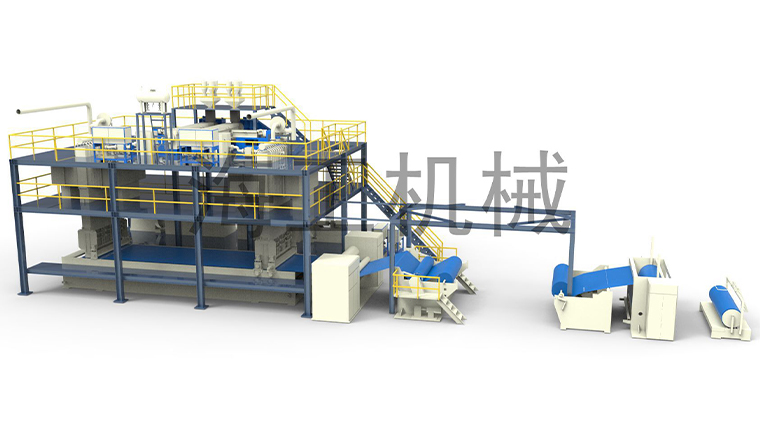
Engineered for packaging nonwoven bags, agricultural covers, and eco-friendly furniture substrates in Thailand's industrial zones.
View Specs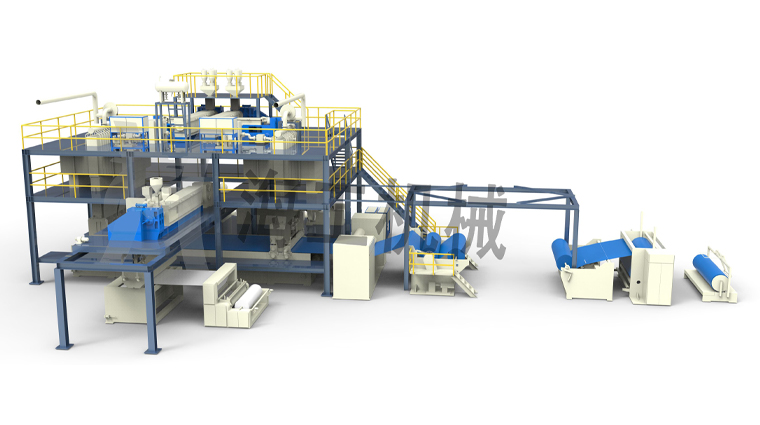
Delivers high-barrier medical protection fabrics. Extensively adopted by Thailand's healthcare and sanitary product manufacturers.
View Specs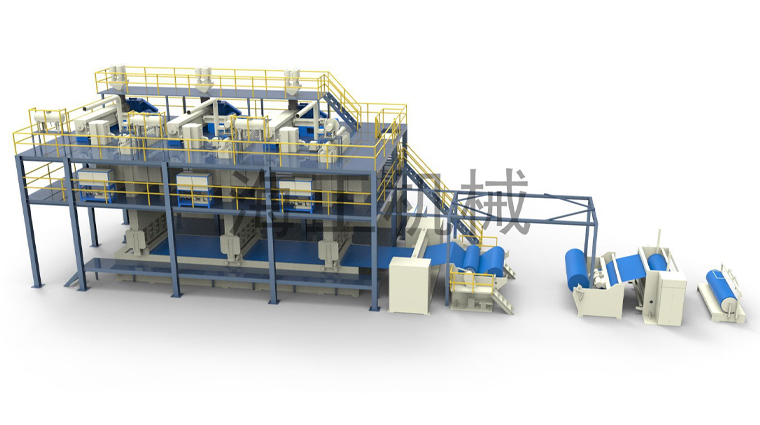
Constructed with 4-layer SMS composite configuration, supplying supreme filtration efficiency and premium structural integrity.
View Specs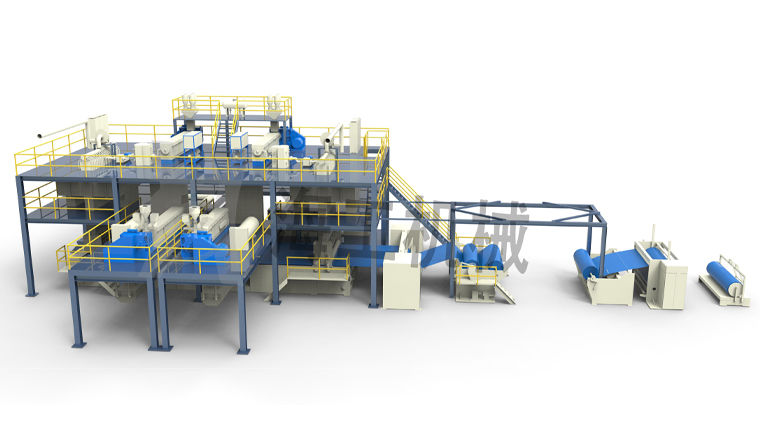
Engineered for baby diapers, adult incontinence, and feminine hygiene products. Soft touch feel combined with dynamic barriers.
View SpecsIntroducing elite European concepts optimized with autonomous 5th Generation Spunbond Spinning Technology.
HG Nonwoven Machinery is a professional manufacturer of spunbond, meltblown, and composite nonwoven fabric machine lines, dedicated to providing high-efficiency and innovative spunbond nonwoven fabric production solutions to the global market. Our company introduced advanced design concepts from overseas and integrated them with autonomous control tailored for the market's evolving needs.
Consequently, our nonwoven fabric making machines are characterized by convenient operation, compact footprint, low power consumption, high yield, and low overall production costs. We provide local support across major industrial centers globally, ensuring seamless setups.
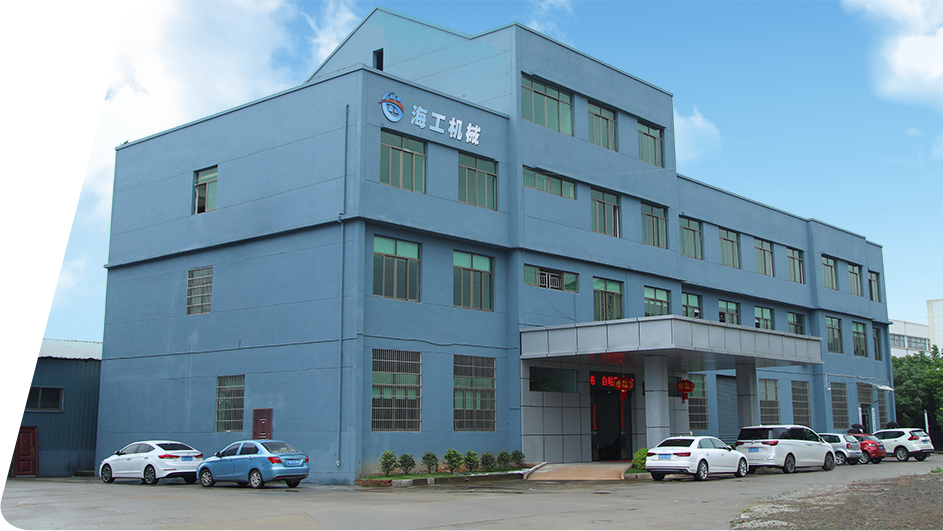
Pujaing HG Nonwoven Machinery has been a recognized manufacturer since 2014, specializing in PP spunbond and meltblown machinery with complete turnkey engineering services. Our manufacturing focus emphasizes eco-friendly, biodegradable, and high-performance nonwoven fabric applications.
Years Industry Experience
Production Lines Deployed
Countries & Regions Served
Worldwide Technical Support
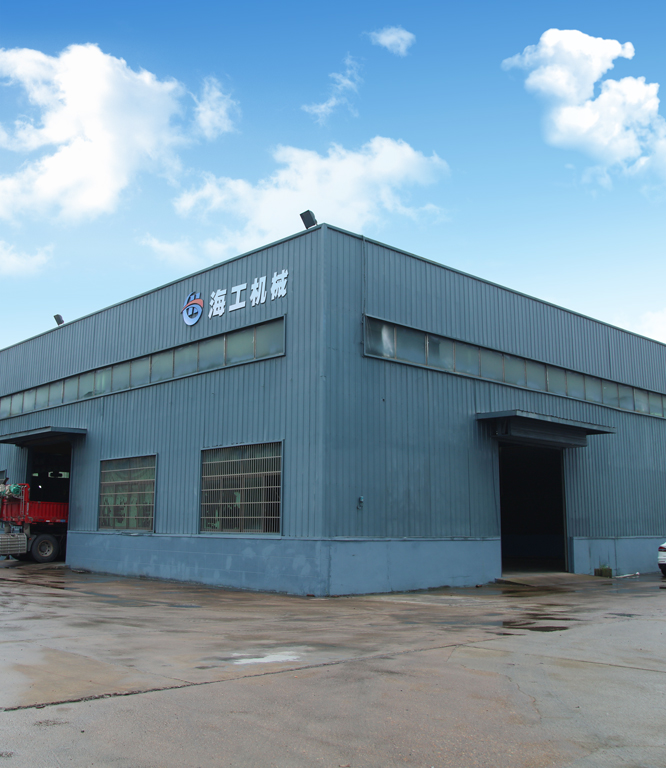
By prioritizing raw material optimization, energy conservation, and system safety, we enable our partners to produce nonwoven fabrics economically, reliably, and sustainably. We support our clients from project conception, through site planning and commissioning, all the way to continuous operations maintenance.
Thailand's strategic positioning within the ASEAN economic zone, driven by the Eastern Economic Corridor (EEC) initiative, has accelerated the demand for advanced, automated industrial machinery. As the second-largest economy in Southeast Asia, Thailand is transitioning its traditional manufacturing sectors toward automated, sustainable, and high-value industrial models. The nonwoven fabric and lamination machine industries have emerged as central pillars in supporting this transformation.
Historically reliant on imported roll-goods, leading manufacturing clusters in Rayong, Chonburi, and Samut Prakan are actively localizing their supply chains. The demand for industrial lamination machines—including extrusion laminators, hot-melt adhesive laminating systems, and ultrasonic composite bonding machinery—is expanding. These systems are crucial for fabricating composite structures used in automotive interiors, consumer hygiene packaging, medical-grade protection wear, and structural agricultural barriers.
1. Ultrasonic & Solvent-Free Composites: To conform to FDA and local health authorities' standards, solvent-free lamination has become standard for food contact packaging and medical nonwovens. Ultrasonic bonding systems offer high tensile strength without chemicals, minimizing VOC emissions.
2. AI-Infused Tension Control: Real-time tension management is crucial when laminating ultrathin nonwovens to breathable PE films. Automated tension control loops powered by load cells and servo drives ensure zero-wrinkle performance, preventing delamination at high operating speeds (up to 300m/min).
3. Modular Extrusion Dies: Precision automatic die systems with internal deckling allow Thai manufacturers to adjust coating widths dynamically, reducing trim waste by up to 65% and improving raw material economy.
Procuring capital machinery requires a comprehensive evaluation of the Total Cost of Ownership (TCO) rather than just initial CAPEX. Procurement managers at major manufacturing firms must balance capacity requirements, power footprints, labor savings, and ease of maintenance. A turnkey setup from HG Nonwoven Machinery integrates material preparation, extrusion, winding, lamination, and automated slitting into a unified production control system.
Every nonwoven production line is custom-tailored to site dimensions, power constraints, and target product portfolios, ensuring maximum operational compatibility.
Our heating systems and structural designs leverage high-efficiency induction systems, delivering energy savings of up to 20-30% compared to legacy machines.
We deploy on-site engineers for installation and training, and utilize digital IoT platforms for remote troubleshooting, minimizing downtime.
Our composite lamination and nonwoven systems are designed to deliver reliable performance across diverse sectors.

High-speed fabrication of breathable, ultra-soft nonwoven composites for baby diapers, adult sanitary pads, and medical-grade underpads.

Critical bacterial barrier performance for surgical gowns, drapes, masks, and protective isolation wear, meeting international safety metrics.

Sturdy, reusable shopping bags, flower wrapping, grain storage sacks, and compound pouch materials featuring high puncture resistance.

Crop protection covers, UV-stabilized root bags, and frost barriers that optimize microclimates while ensuring water and air permeability.
Operating industrial machinery in Thailand requires adherence to the standards set by the Thai Industrial Standards Institute (TISI) along with safety guidelines defined by the Department of Industrial Works (DIW). Key considerations include electrical safety configurations, emergency shut-off architectures, and emission management.
Our machinery is configured to meet CE directives and international ISO9001 quality standards. For the Thai market, we calibrate the electrical configuration of our systems to match local industrial grid profiles (typically 380V, 50Hz, 3-Phase). Control cabinets are engineered to withstand high ambient temperatures and humidity levels, incorporating integrated industrial cooling units that maintain structural integrity and extend component lifespans.
Beyond our primary spunbond and composite lines, we deliver integrated ancillary equipment to ensure seamless, end-to-end processing:
Examine our engineered production lines designed to support robust, high-yield composite operations.
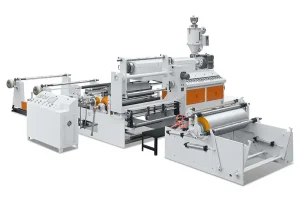
Designed for laminating nonwoven substrates with breathable film barrier layers, optimized for hygiene and medical applications.
View Product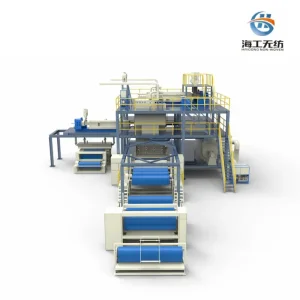
High-output PP spunbond line designed for regional industrial packaging, building, and furniture backing markets.
View Product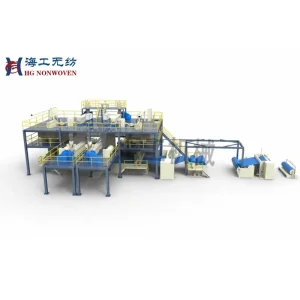
Integrates dual spunbond beams with a meltblown center beam to deliver high-tensile barrier textiles.
View Product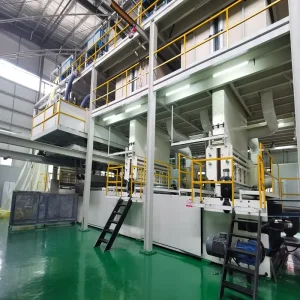
A space-efficient SS line designed for packaging and agricultural application needs across industrial parks.
View Product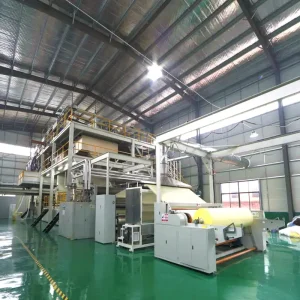
Engineered for large-scale production runs, with automated raw material dosing and optimized melt extrusion.
View Product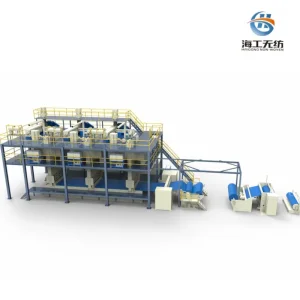
Features high precision slot die geometry to distribute filaments uniformly, minimizing web variations.
View Product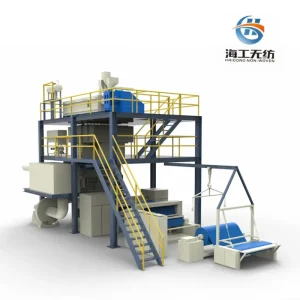
Ideal for small-to-medium enterprises starting manufacturing in the regional nonwoven sector.
View Product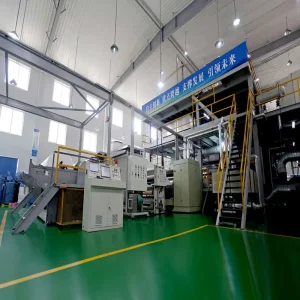
Includes full feeding, spinning, web forming, calendar bonding, winding, and slitting systems.
View ProductAs polymer technology evolves, our machinery designs prioritize compatibility with a wider range of bio-based resins. Our systems are engineered to help manufacturers reduce carbon emissions and minimize process waste.
Polylactic Acid (PLA) and Polybutylene Succinate (PBS) feature different rheological profiles and melt temperatures compared to standard Polypropylene (PP). Our latest extruder configurations use specialized screw geometries and multi-zone temperature profiles to ensure uniform melting without polymer degradation.
Operating a multi-beam nonwoven composite line requires synchronized control of dozens of variables. We utilize PLC architectures featuring high-speed Ethernet communication protocols. Operator stations provide real-time diagnostic screens showing pressure profiles, temperature zones, tension measurements, and air flow speeds.
To support localized waste mitigation, our edge trim recycling units automatically pull material back into the primary feed throat without manual handling, maintaining raw material purity and reducing resin consumption by up to 5%.
Key information for sourcing directors planning lamination and nonwoven setups in Thailand.
 HG NONWOVEN