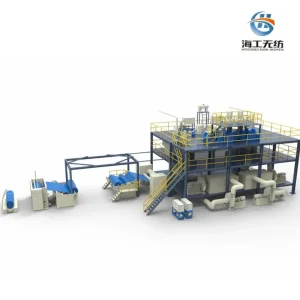
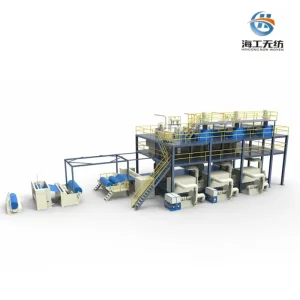
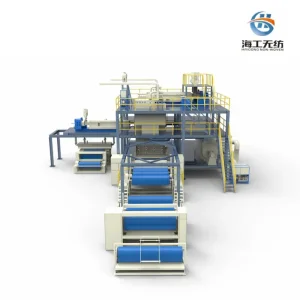
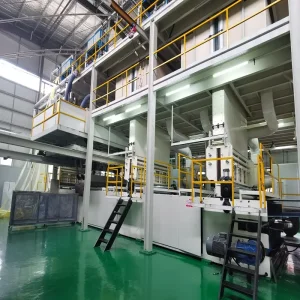
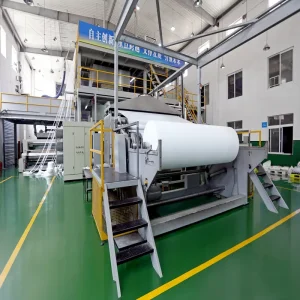
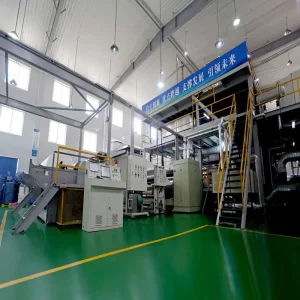
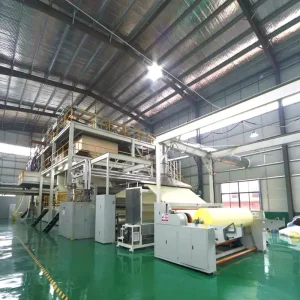
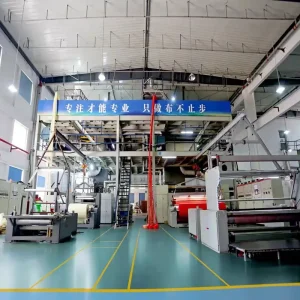
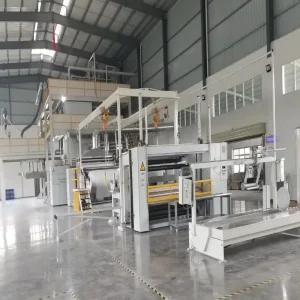
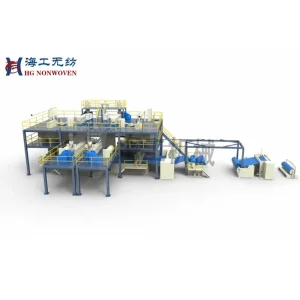
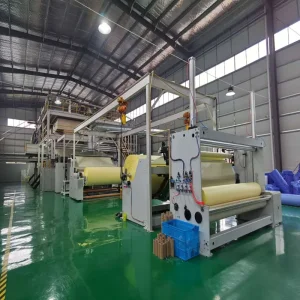
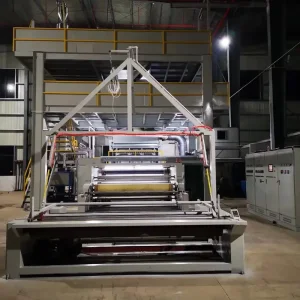
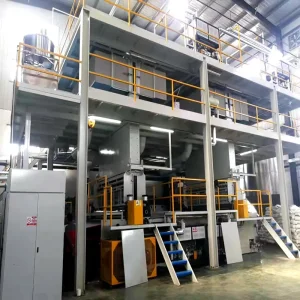
Explore our state-of-the-art nonwoven machinery, designed for optimal polymer throughput, low operational expenditure, and high structural fabric uniformity.
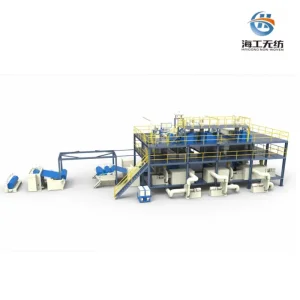
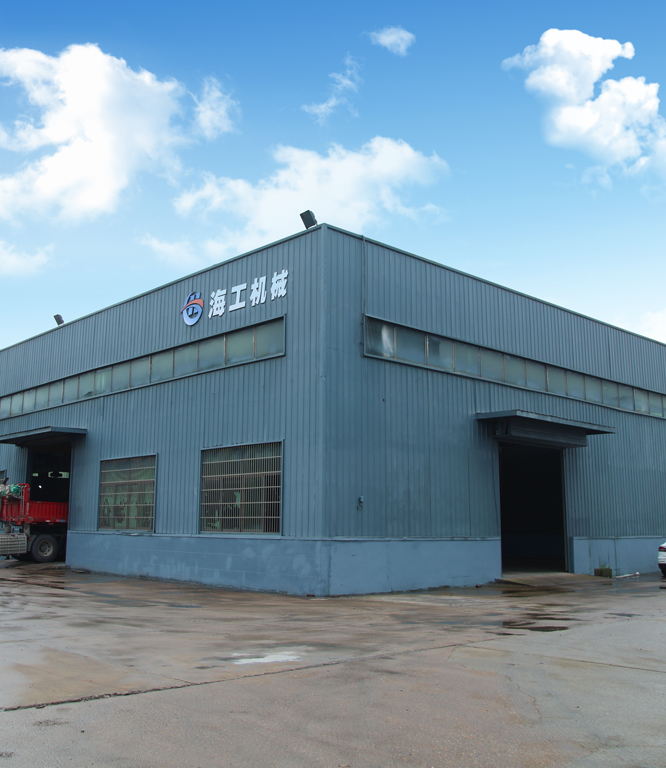
Pujiang HG Nonwoven Machinery Co., Ltd. (established in 2014) has positioned itself as a premier enterprise in the design, engineering, and deployment of fully integrated Polypropylene (PP) Spunbond, Meltblown, and Multi-Beam Composite (SMS, SMMS, SSMMS) nonwoven fabric production lines. Integrating international design benchmarks—most notably our proprietary 5th-Generation spunbond spinning beam technology—with localized market agility, HG Nonwoven Machinery delivers capital equipment characterized by minimal operational footprint, ultra-low specific energy consumption per ton of output, exceptional mechanical stability, and streamlined user interfaces.
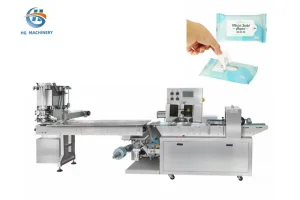
As a specialized OEM and EPC contractor for global nonwoven manufacturers, HG Nonwoven Machinery oversees every step of plant creation. From raw polymer melt flow index (MFI) optimization and thermal calendering physics to post-processing downstream machinery (slitting, flexographic printing, lamination, and automated bag making), our turnkey engineering philosophy delivers rapid commission-to-production cycles and maximizes Return on Investment (ROI).
The global nonwovens market is undergoing a structural paradigm shift driven by stringent regulatory frameworks, eco-conscious end-consumer demands, and the rapid expansion of hygiene and medical sectors across emerging markets. Industrial procurement teams evaluating machinery options from Chinese suppliers must navigate complex trade-offs between capital expenditure (CAPEX), operational expenditure (OPEX), material versatility, and compliance with environmental directives such as the EU Single-Use Plastics (SUP) Directive.
Driven by rising standards of living in Asia-Pacific, Latin America, and Africa, demand for ultra-soft, low-GSM (10-25 gsm) spunbond and SMS fabrics for diaper top-sheets, back-sheets, and leg cuffs is soaring. Modern procurement mandates high fiber fineness (1.5-2.0 denier) to achieve skin-friendly softness without compromising barrier integrity.
Post-pandemic healthcare infrastructure demands guaranteed barrier properties (hydrostatic head > 50 cm H2O) and high particle filtration efficiency (PFE > 99%). Multi-beam SMS and SSMMS composite systems represent the gold standard for surgical gowns, drapes, and sterilization wraps.
With regulations phasing out conventional single-use plastic film packaging, PP spunbond nonwoven fabrics have emerged as the primary alternative for reusable shopping bags, garment covers, and agricultural microclimate protection, necessitating high-speed, high-tensile-strength S and SS production lines.
| Line Configuration | Target Grammage (GSM) | Max Mechanical Speed | Filament Denier | Primary Industrial Applications |
|---|---|---|---|---|
| Single Beam (S) PP | 10 - 150 gsm | Up to 350 m/min | 1.8 - 2.5 dtex | Eco Shopping Bags, Agricultural Covers, Mattress Interlinings |
| Double Beam (SS) PP | 9 - 120 gsm | Up to 450 m/min | 1.5 - 2.0 dtex | Hygiene Diaper Topsheets, Sanitary Towels, Medical Underpads |
| Triple Beam (SSS) PP | 8 - 100 gsm | Up to 600 m/min | 1.2 - 1.8 dtex | Premium Ultra-Soft Hygiene Products, High-Speed Converting Lines |
| SMS Composite | 12 - 80 gsm | Up to 400 m/min | Spunbond: 1.5-2 dtex Meltblown: 2-4 µm |
Surgical Gowns, Protective Overalls, Industrial Filtration |
| SSMMS Composite | 10 - 70 gsm | Up to 500 m/min | Spunbond: 1.2-1.8 dtex Meltblown: 1.5-3 µm |
Advanced Medical Barrier Drapes, Critical Care Hygiene Layers |
HG Nonwoven Machinery's technological superiority stems from meticulous continuous-filament spinning dynamics and precision thermal bonding control. Our 5th-Generation spinning technology integrates key electro-mechanical breakthroughs designed to optimize polymer degradation profiles, reduce fiber attenuation variance, and minimize power draft.
Utilizing high L/D ratio (30:1 to 32:1) single-screw extruders paired with gravimetric multi-component dosing units. This ensures precise masterbatch color dispersion, UV stabilizer integration, and thermal stabilization while preventing melt pressure fluctuations across the spinneret beam.
Our proprietary cross-flow quenching system delivers micro-filtered, temperature-controlled air (18-22°C) evenly across the filament curtain. High-pressure narrow-slot air draft chambers accelerate filaments to speeds exceeding 4,000 m/min, achieving fine denier counts and exceptional molecular orientation.
Web laying features negative-pressure suction beneath the porous web belt to eliminate air turbulence and prevent fiber clustering. Dual-roll thermal calenders with high-precision oil heating systems ensure uniform pressure and thermal bonding across web widths up to 3.2 meters.
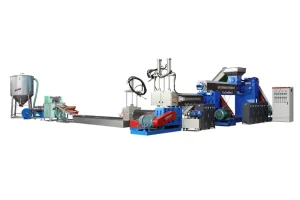
In response to global circular economy demands, HG Nonwoven Machinery integrates inline edge-trim recycling systems and offline granulating units. Edge trims are continuously collected by pneumatic suction, converted back into molten polymer pellets without thermal degradation, and re-introduced directly into the main extruder inlet. This zero-waste loop yields up to 5-7% raw material cost savings per annum.
HG Nonwoven Machinery provides domain-specific engineering configurations tailored to exact client product portfolios. Selecting the correct machinery configuration determines operational profitability and end-product compliance.

Our SS and SSS lines produce ultra-soft, breathable fabrics optimized for rapid fluid acquisition and low wet-back performance. Designed specifically for baby diapers, adult incontinence garments, and feminine hygiene pads where skin contact sensitivity requires zero surface harshness.

Multi-beam SMS, SMMS, and SSMMS lines integrate high-melt-flow meltblown spinning beams to form dense micro-porous barrier webs. Fabrics provide absolute protection against viral, bacterial, and liquid penetration while remaining breathable for extended medical use.
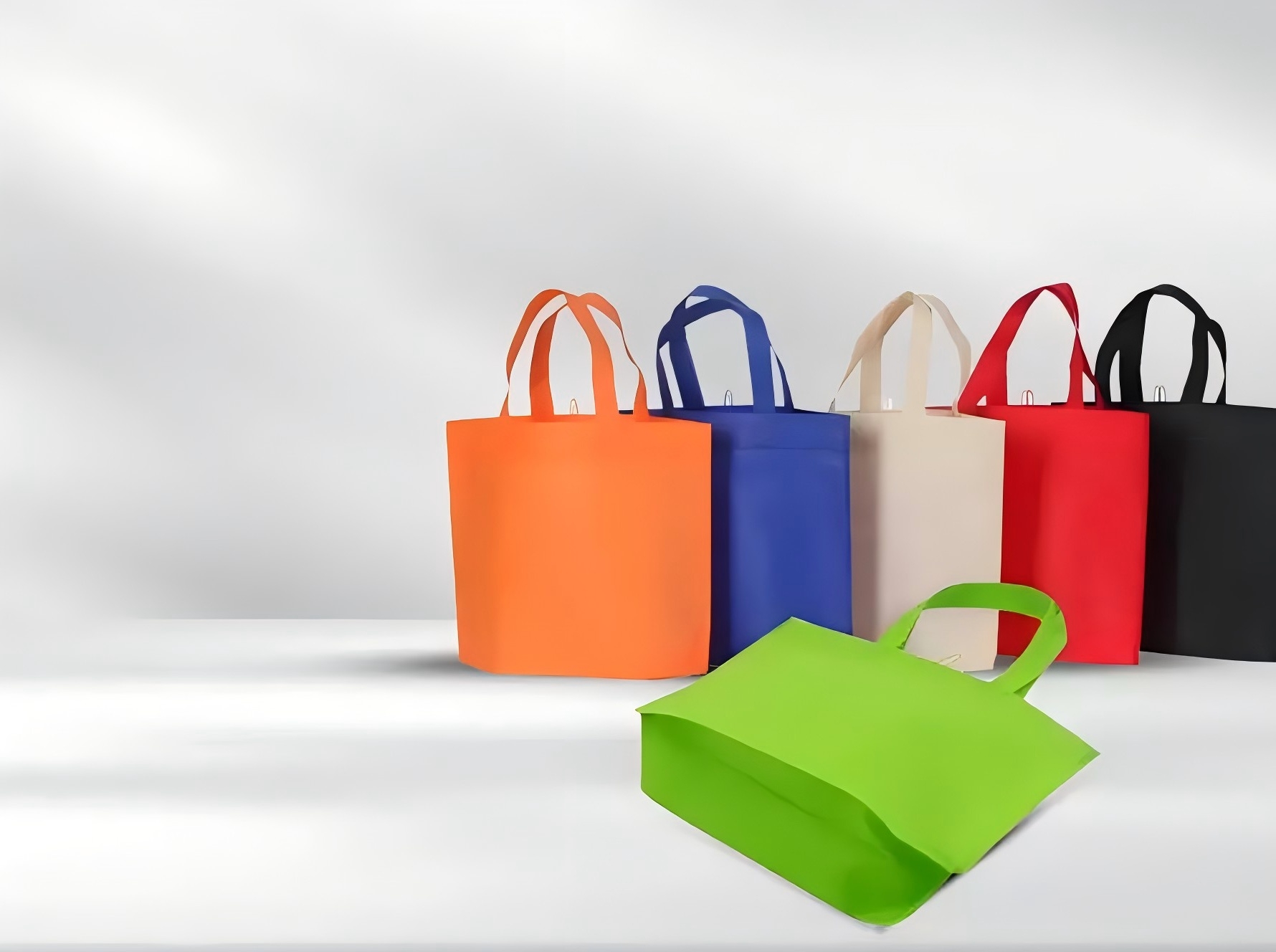
High-tensile Single Beam (S) lines engineered for high-grammage (40-120 gsm) packaging substrates. Ideal for eco-friendly shopping bags, suit covers, pocket spring mattress casings, furniture interlinings, and industrial filtration media requiring superior tensile and tear resistance.
Investing in a nonwoven fabric manufacturing plant requires thorough pre-investment analysis, customized structural layout planning, seamless installation, and post-commissioning maintenance. HG Nonwoven Machinery acts as your strategic global partner, offering comprehensive engineering services that mitigate risk and accelerate market entry.
We provide localized market analysis, helping clients select optimal machine specifications based on regional resin availability, power infrastructure, and end-user demand profiles. Our financial ROI models account for raw material consumption, utility overheads, labor costs, and scrap rate mitigation.
Our engineering team delivers 3D architectural plant layouts specifying foundations, ceiling clear heights, electrical substation requirements, compressed air piping, cooling water loops, and ductwork integration tailored to your exact land parcel or existing industrial building.
HG deployment engineers oversee mechanical assembly, electrical wiring, PLC programming, and hot testing on site. We provide hands-on operator training covering polymer blend adjustment, spinneret cleaning protocols, thermal roller nip tuning, and routine predictive maintenance.
Every HG production line is backed by an industry-leading 24-month warranty. Integrated IoT remote diagnostic modules allow our control engineers to perform real-time PLC diagnostics, software updates, and operational troubleshooting from anywhere in the world.
Addressing critical technical, financial, and operational inquiries for global nonwoven line buyers.
Browse our full selection of specialized nonwoven production lines, recycling machinery, and auxiliary converting systems.
 HG NONWOVEN