Engineered to handle high-molecular polymer extrusion and PP nonwoven production for Mumbai's fast-expanding manufacturing ecosystems.
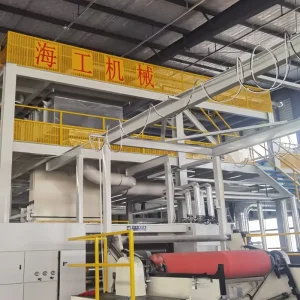
Designed for heavy-duty PP spunbond fabric production, this engineering system offers maximum reliability and low energy metrics for Indian factory floors.
Technical Details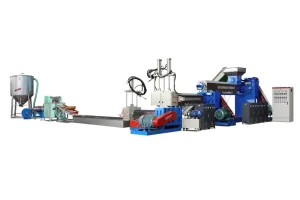
Equipped with specialized continuous melt filtration, this machine recycles post-industrial PP waste into high-purity spinning-grade pellets.
Technical Details
Heavy-duty granulating and shredding systems engineered to process tough polymer waste feeds into uniform size parameters ready for extrusion lines.
Technical Details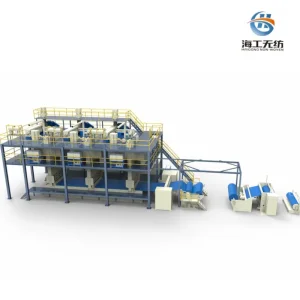
Delivers precision drafting and cooling technology to manufacture high-tensile nonwoven fabrics matching ISO and global quality metrics.
Technical DetailsIn-depth insights into Mumbai's plastics processing infrastructure, regulatory environment, and technical machinery integrations.
Mumbai, the commercial and financial capital of India, acts as one of the country's most critical manufacturing hubs. According to statistics from the Maharashtra Pollution Control Board (MPCB), the Mumbai Metropolitan Region (MMR) generates hundreds of tons of municipal and industrial plastic waste daily. Rapid urbanization, combined with strict regulatory measures enacted under the Maharashtra Plastic and Closed-loop Waste Management schemes, has placed significant pressure on local industries. In response, businesses are transitioning from basic thermal degradation and incineration toward high-value mechanical and chemical upcycling.
Traditional recycling methods across industrial zones in Thane, Taloja, Kalyan, and Bhiwandi have historically relied on low-tech pelletizing setups. However, modern polymer compliance frameworks require recycled resins to match virgin material properties. For manufacturers in Mumbai, this demands advanced engineering: multi-stage degasification extruders, automatic continuous screen changers, and integrated downstream conversion lines like nonwoven fabric manufacturing machinery. Implementing these advanced systems allows processing facilities to transform post-industrial scrap into high-tensile polypropylene nonwoven products, tapping into lucrative pharmaceutical, medical, and FMCG packaging chains across India.
For Mumbai-based industrial plants, a major issue in traditional recycling is thermal degradation. When polypropylene (PP) or polyester (PET) undergoes multiple heat cycles during reprocessing, its melt flow index (MFI) increases, reducing its mechanical strength. HG Nonwoven Machinery addresses this through a integrated macro-process: connecting high-performance recycling machines with advanced spunbond and meltblown lines. This process converts low-bulk waste fibers directly into high-density pellets, which are then combined with virgin polymer in controlled ratios for direct spunbond spinning.
This closed-loop system is highly effective for manufacturers in Bhiwandi and Taloja. By bypassing the need to source expensive virgin materials, companies can achieve a circular manufacturing cycle. Scrap generated during nonwoven trimming, slitting, and bag-making is fed directly into a local granulator and pelletizing line. These recycled pellets are immediately returned to the main extrusion hopper of the spunbond machine, maintaining high efficiency and lowering operational costs.
Globally, the plastic recycling and polymer processing industries are shifting toward energy efficiency and high-output automation. In European and Chinese manufacturing, operations rely on centralized, PLC-controlled systems with continuous melt filtration. This minimizes production downtime and prevents labor-intensive manual screen swaps. For Mumbai's industrial zones, adopting these global standards is crucial to remain competitive and comply with local environmental regulations.
Under the Maharashtra Pollution Control Board (MPCB) and India's nationwide Extended Producer Responsibility (EPR) guidelines, plastic packaging producers must ensure minimum levels of recycled content. Crucially, their manufacturing processes must also remain energy-efficient and generate minimal emissions. HG Nonwoven Machinery meets these needs by offering compact-footprint designs, low power-to-output ratios, and highly integrated pelletizing and nonwoven manufacturing setups. Investing in these automated systems helps local manufacturers secure environmental clearances, reduce raw material costs, and access global markets that mandate sustainable, recycled-content packaging.
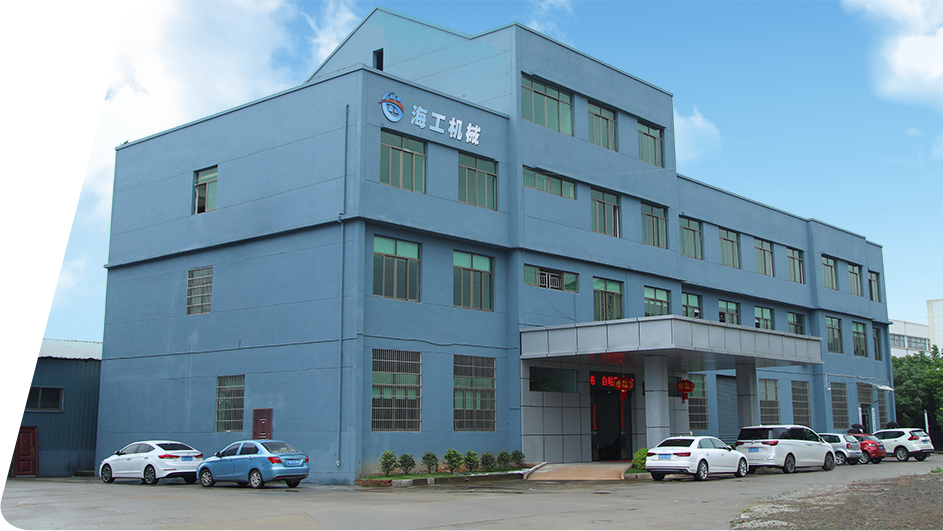
Pujiang HG Nonwoven Machinery is a well-known nonwoven fabric making machine manufacturer established in 2014. We specialize in manufacturing high-efficiency PP spunbond and meltblown nonwoven fabric making machines alongside complete turnkey engineering services. Our engineering solutions focus on producing high-performance, eco-friendly, and biodegradable spunbonded nonwoven fabrics globally.
We incorporate advanced design concepts, such as our 5th Generation spunbond spinning technology, and integrate them with local market requirements. HG machines feature convenient operation, a compact footprint, low power consumption, and high production efficiency. Additionally, our specialized engineering services cover related auxiliary setups, including nonwoven recycling machines, slitting units, flexo printing systems, lamination machines, and automatic bag-making lines.
Implementing high-output polymer processing and spunbond lines in Mumbai unlocks several high-demand local markets:
The future of polymer processing in India lies in high-level automation, energy conservation, and processing biodegradable materials. HG Nonwoven Machinery is actively developing technologies to process Polylactic Acid (PLA) and other bio-based resins on standard spunbond lines. This transition will allow Mumbai manufacturers to produce 100% compostable and biodegradable nonwoven fabrics, staying ahead of evolving environmental regulations.
Additionally, our future-ready systems incorporate real-time IoT monitoring. These digital interfaces track energy usage, control extruder temperatures, and monitor filament thickness. By implementing remote diagnostics and predictive maintenance, Mumbai-based factories can minimize unplanned downtime and optimize throughput, ensuring a rapid return on investment.
Addressing the key technical, financial, and operational concerns of polymer processors and nonwoven manufacturers in India.
Discuss your technical requirements, processing capacity goals, and site constraints with our expert engineering team.
Send Inquiry NowExplore our complete range of high-efficiency production lines, engineered to manufacture durable, eco-friendly fabrics for diverse industrial applications.
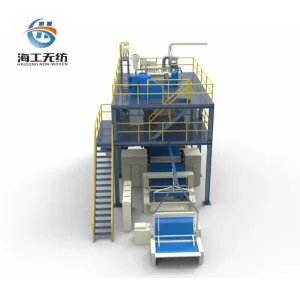
Engineered for high-volume operations, delivering consistent fabric density and tensile strength.
Technical Details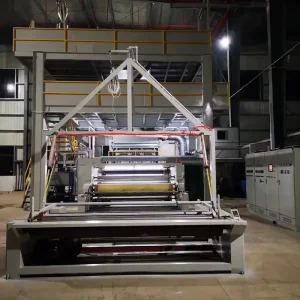
Features automatic control loops to ensure reliable output for industrial packaging applications.
Technical Details
Designed with high-precision spinnerets to produce uniform, soft nonwoven materials.
Technical Details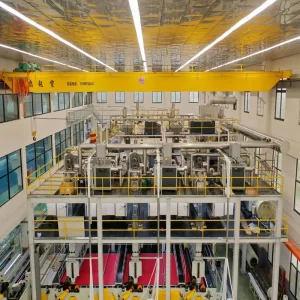
A heavy-duty system optimized for long runs, reducing overhead and material waste.
Technical Details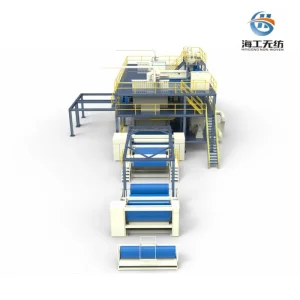
A compact, mid-width line ideal for producing agricultural crop covers and protective wraps.
Technical Details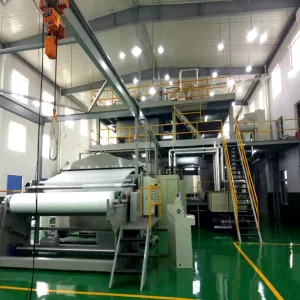
Offers versatile width options, allowing processors to adapt to changing market requirements.
Technical Details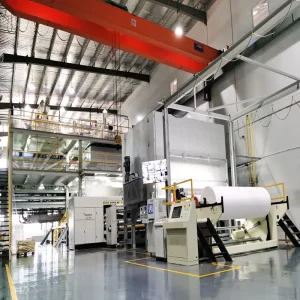
An integrated downstream processing line that simplifies bag manufacturing and slitting.
Technical Details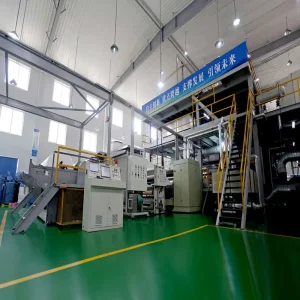
A comprehensive, A-to-Z turnkey manufacturing line engineered for modern polymer processing.
Technical Details HG NONWOVEN