High-efficiency processing technology designed to handle structural polymers and nonwoven scrap with low power consumption.
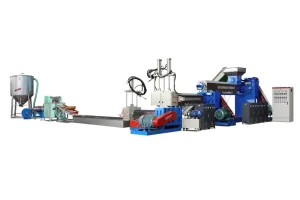
Designed for recycling rigid and flexible PP waste. Features continuous double-piston screen changers for pelletizing contaminated feedstocks.
Technical Specifications
High-torque granulator built for structural plastic waste. Delivers uniform regrind size distribution with minimal dust generation.
Technical Specifications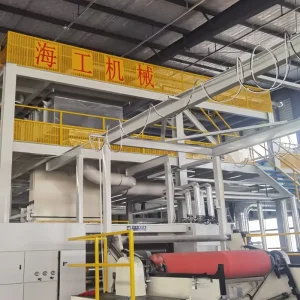
Equipped with 5th Gen spinning technology. Delivers high tensile strength nonwoven rolls with optimized fiber distribution.
Technical Specifications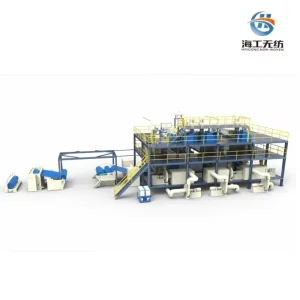
Integrated multi-beam system producing meltblown and spunbond layers for medical barrier packaging and hygiene goods.
Technical SpecificationsLatvia, under European Union green directives and the European Green Deal, is accelerating its transition to circular waste frameworks. The national waste management plan targeting 2021-2027 places strict focus on municipal and industrial packaging recycling. Landfill tax rates in Latvia continue to rise, pushing regional manufacturing hubs in Riga, Liepāja, and Ventspils to integrate up to 50% recycled content in consumer packaging and industrial products.
For Baltic converters, localizing recycled polymer sourcing is no longer just a way to save costs—it is a regulatory necessity. Our specialized plastic recycling and extrusion systems process post-industrial scrap and post-consumer plastics, turning them into high-purity granules. By incorporating advanced double-vented degassing extruders, our equipment removes volatile contaminants and moisture, making the recycled material suitable for demanding applications like agricultural sheeting, construction films, and spunbond nonwovens.
Transforming scrap polymers into quality-certified raw materials with low thermal degradation.
Our extruders use optimized L/D ratios of 30:1 or 32:1, combined with custom barrier screws. This design provides high shear mixing at low temperatures, preserving the molecular weight of polymers like PP, HDPE, and PET.
Equipped with dual-zone high-vacuum degassing systems, the machinery removes ink residues, moisture, and low-molecular-weight volatiles, preventing pinholes and structural defects in downstream extrusion processes.
Features double-piston hydraulic screen changers that swap screens without interrupting production. This maintains constant melt pressure, preventing process line interruptions.
| Parameter | Standard Recycling Extruders | HG High-Efficiency 5th Gen Recycling Systems | Impact on End-Product (Latvia Market) |
|---|---|---|---|
| Specific Energy Consumption | 0.35 - 0.45 kWh/kg | 0.22 - 0.28 kWh/kg | Lowers operating costs amidst high European energy rates. |
| Melt Index Stability (MFI) | Variance of ±15% | Variance of < ±5% | Provides uniform viscosity for nonwoven spinning and thin film extrusion. |
| Contaminant Filtration Level | Up to 150 microns | Down to 50 microns | Suitable for ultra-thin film and micro-denier spunbond production. |
| Screw & Barrel Protection | Nitrided steel coating | Bimetallic tungsten carbide lining | Prolongs machinery lifespan when processing abrasive materials. |
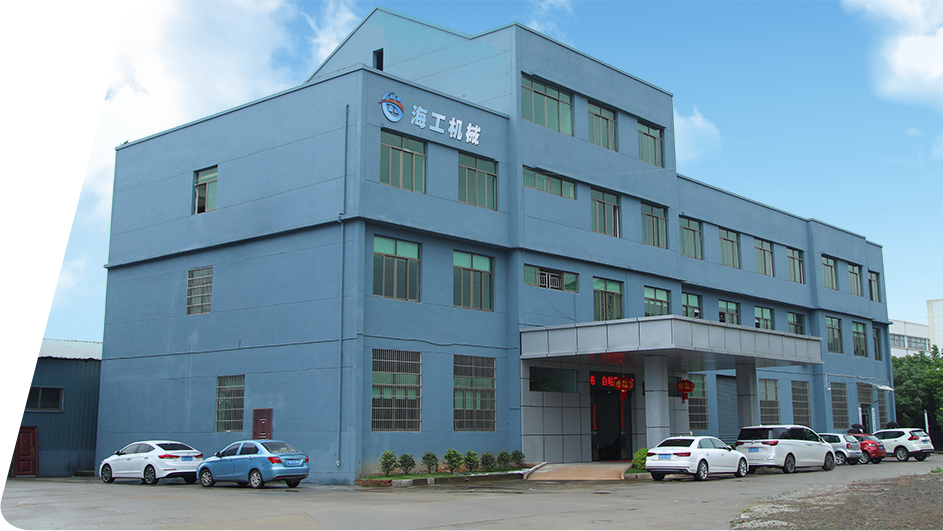
Since 2014, manufacturing high-performance extrusion and recycling lines with global quality standards.
Working with HG Nonwoven Machinery gives Baltic manufacturers a balance of precision engineering and cost efficiency. Our factory in Zhejiang leverages a highly integrated component supply chain. We perform critical machining—such as bimetallic screw treatment and hanger-type die head calibration—in-house, maintaining tight tolerances while reducing lead times compared to European suppliers.
By sourcing raw materials strategically and using modular assembly techniques, we deliver machines with a competitive cost-to-performance ratio. These systems meet CE certifications, ensuring compliance with European safety standards. They feature Siemens PLC human-machine interfaces, digital feedback loops, and Schneider electrical components to provide high reliability for continuous operations.
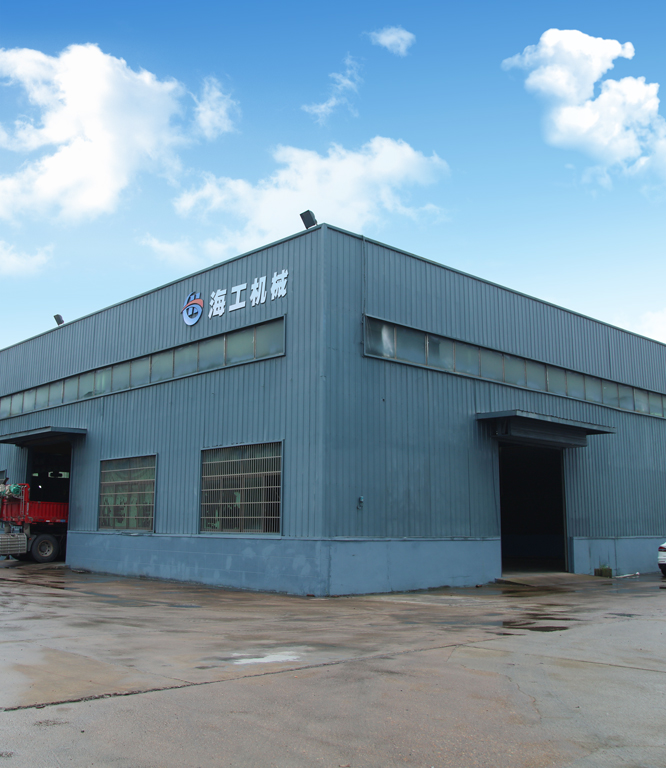
Tailored technology for regional agricultural, packaging, and nonwoven manufacturers.
Reclaiming low-density polyethylene (LDPE/LLDPE) silage wraps and greenhouse films. The washing and granulating lines feature specialized sand-removal units and heavy-duty wear-resistant screws to process highly abrasive soil-contaminated feedstocks.
Processing edge trim and scrap from PP spunbond and meltblown lines. The compact design feeds materials directly into the extruder feed throat without pre-shredding, protecting the polymer from multiple thermal cycles.
Converting post-industrial shipping sacks, jumbo bags, and PP straps into high-density pellets. These recycled granules can be mixed with virgin resins for blow molding, injection molding, or sheet extrusion.
Explore our technical systems designed for high output, precise melt control, and continuous material processing.
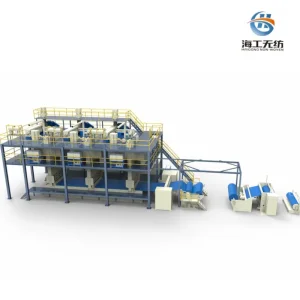
High-speed beam configuration with precise air-drawing systems, delivering high tensile strength and low weight variation.
View Details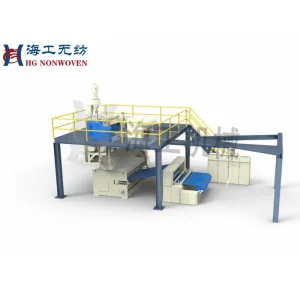
Designed for medical-grade barrier fabrics, featuring energy-efficient hot-air stretch systems and automated winding units.
View Details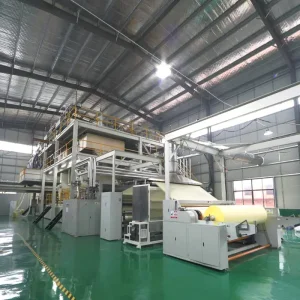
High-output double-beam system designed to produce soft, strong fabrics for shopping bags and furniture backing.
View Details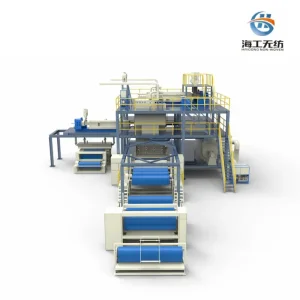
Flexible configuration that processes virgin and recycled PP polymers, featuring dual extrusion zones for structure control.
View Details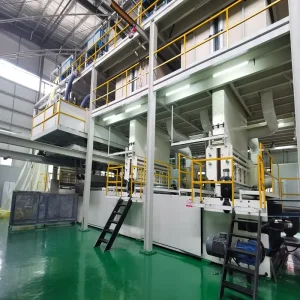
A space-saving 1.6-meter double-beam line designed for fast recipe changes and low energy consumption.
View Details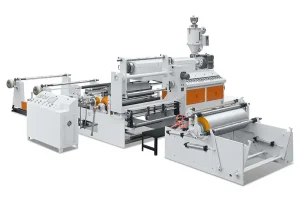
Applies precise coating to nonwovens, papers, and films, producing liquid-proof barriers for medical and industrial applications.
View Details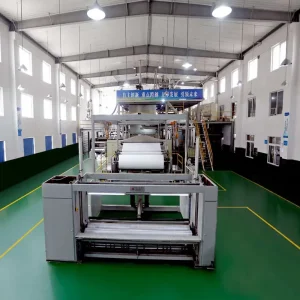
Designed for high-speed industrial production, featuring dynamic filament cooling and automated high-tension winders.
View Details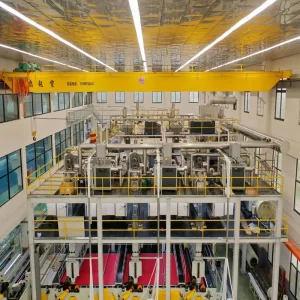
Equipped with a custom feeding system that processes recycled PP regrind, offering a reliable circular solution.
View DetailsTechnical answers on system configuration, energy usage, and polymer recycling parameters.
 HG NONWOVEN