Engineered for maximum tensile strength, high production capacity, and lower energy footprints, optimized for the textile hubs of Lesotho.
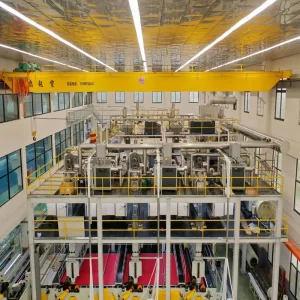
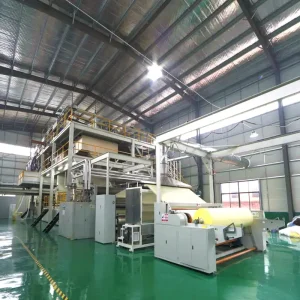
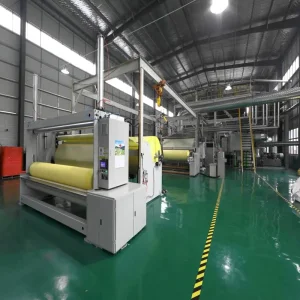
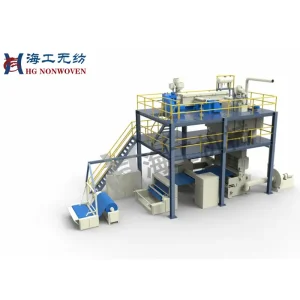
Lesotho has successfully established itself as a premier apparel manufacturing hub in Sub-Saharan Africa, benefiting immensely from preferential trade programs such as the African Growth and Opportunity Act (AGOA) and the Southern African Customs Union (SACU). As the global textile supply chain trends toward regional integration and sustainability, raw material autonomy is the logical next step for local industrialists.
By establishing local Spunbond and Meltblown production capacity, manufacturers in Lesotho can transition from simply assembling imported fabrics to vertically integrated domestic manufacturing. This shift mitigates supply chain risks, eliminates long lead times for imported substrates, and satisfies strict rules-of-origin requirements for global tariff-free export markets.
HG Nonwoven Machinery specializes in designing high-speed, stable, and highly automated machinery tailored to withstand localized constraints such as power fluctuations and high-altitude air pressure variations, ensuring consistent denier uniformity and fabric performance.
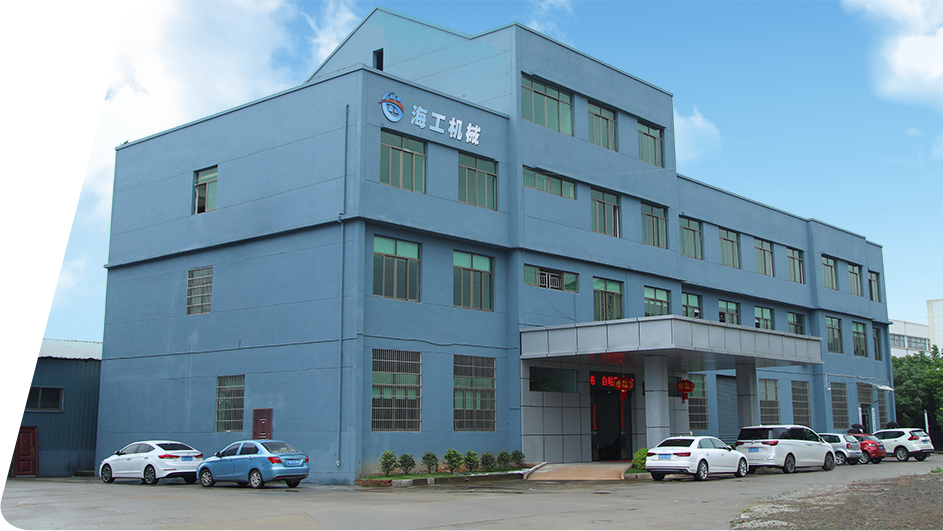
How HG adapts thermodynamic extrusion and pneumatic drafting systems to guarantee consistency at Maseru's elevations.
Maseru sits at approximately 1,600 meters above sea level, where atmospheric pressure and air density are lower. Standard drafting slots require custom calibrations. HG designs wide-range air volume regulators to maintain filament attenuation speeds above 3,500 m/min, yielding fine deniers (1.5 - 2.2 Denier).
To guard against voltage fluctuations common in regional grids, our lines feature active harmonic filters, robust ABB/Siemens drive integrations, and regenerative braking resistors to ensure seamless extruder and spinneret operability without polymer degradation.
Precise temperature distribution across the roll surface (≤ ±1°C) is crucial under variable ambient humidity. Our thermal bond calenders utilize internal oil-circulation heaters that automatically adapt to local thermodynamic equilibrium parameters.
Years of R&D and Manufacturing Excellence
Nonwoven Lines Commissioned Worldwide
Countries with Dedicated Operations Support
Remote Diagnostic Technical Assistance
We provide full upstream and downstream equipment to guarantee seamless commercial production from day one.
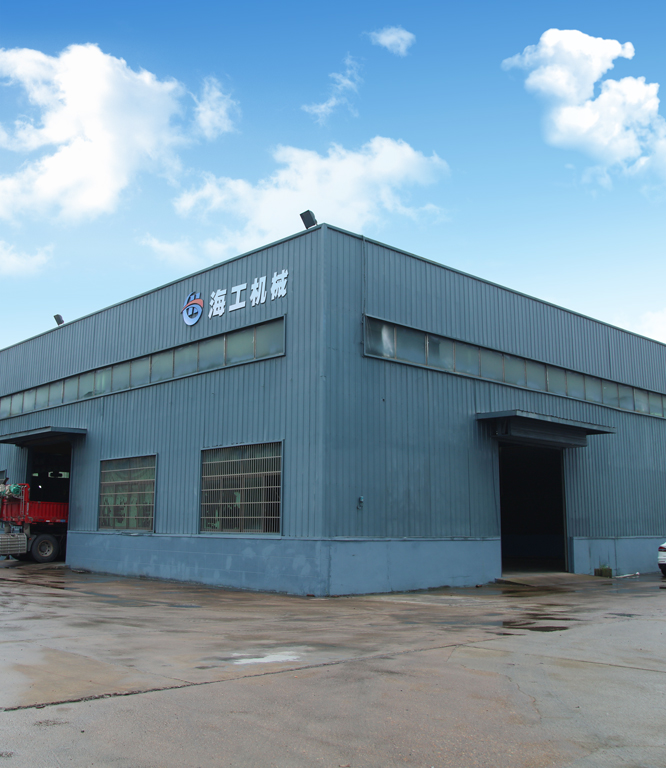
A functional spunbond facility requires more than just the spinning beam. In alignment with modern circular economy models, we configure custom systems for waste recovery, final packaging conversion, and structural enhancements. Our turnkey installations include:
Through this holistic integration, Lesotho-based companies can optimize raw material ratios, lower overhead costs, and maximize output margins.
From PP granular chips to thermal bonding: The journey of polymer transformation under strict quality checks.
Polypropylene chips (MFR 25–40) are pneumatically vacuumed, dosed with additives, and melted via a precision temperature-controlled screw extruder.
Molten polymer is metered into the spin pack beam. Hundreds of continuous filaments emerge, immediately chilled by optimized cross-flow air.
Filaments are drawn downward through a high-velocity venturi slot using pressurized air, achieving maximum molecular orientation.
Attenuated fibers are distributed randomly onto a continuous belt to form a web, which is then heat-pressed by a heated calender unit.
Select the ideal machine configuration to address packaging, medical protection, agriculture, and industrial filtration sectors.
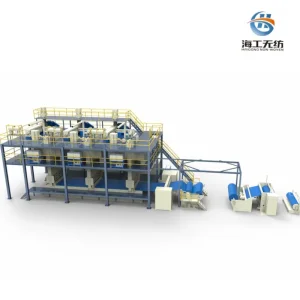
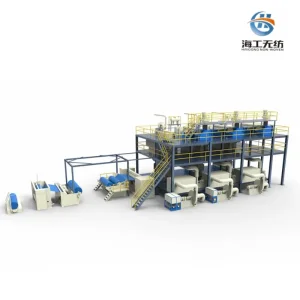
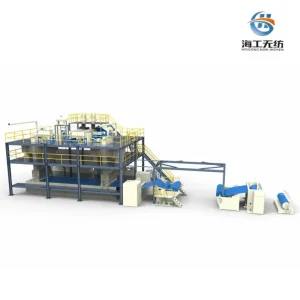
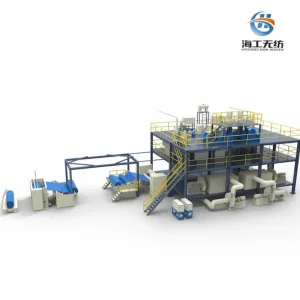
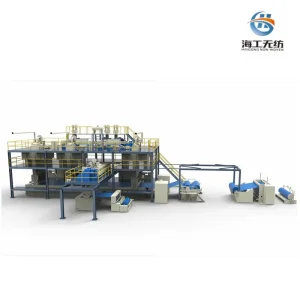
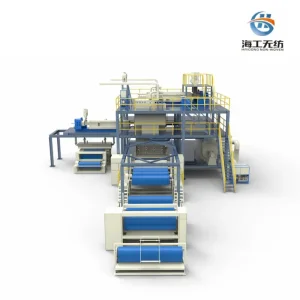
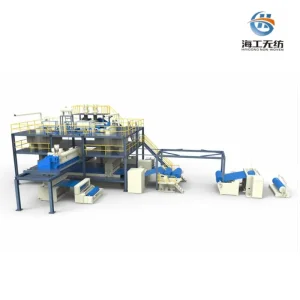
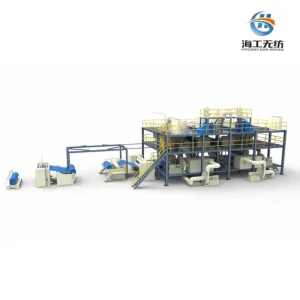
Aligning raw mechanical configuration with correct industrial applications to ensure target fabric performance.

Provides critical softness, low-GSM uniform web coverage, and fast absorption properties. Essential for manufacturing diapers, adult incontinence products, and feminine care solutions.

Utilizes multi-beam configurations (SMS, SMMS, SSMMS) to construct high barrier barriers against liquids and microscopic pathogens. Used for surgical gowns, masks, and sterile sheets.

Offers superb tear resistance and mechanical strength. Ideal for durable, eco-friendly shopping bags, fruit wrap protection, garment covers, pocket springs, and lining structures.
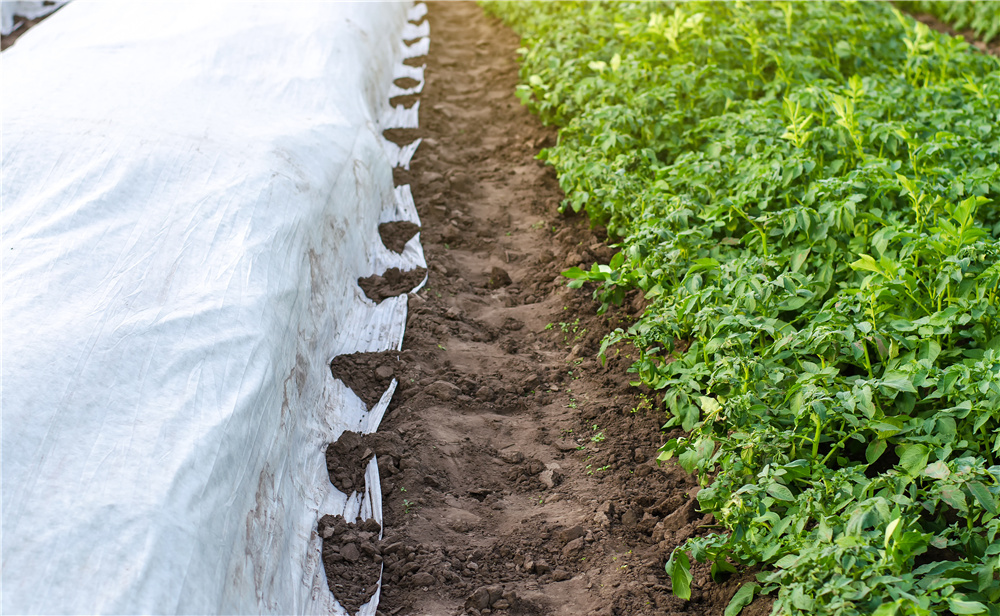
Engineered for UV stability, water permeability, and microclimate regulation. Protects young crops from cold snap periods, birds, insects, and soil erosion.
HG Nonwoven Machinery is at the forefront of the ecological transition. Recognizing global shifts toward limiting single-use plastics, our 5th Generation Spunbond machines are dynamically built to handle alternative resins, including Poly Lactic Acid (PLA) and polyhydroxyalkanoates (PHA), alongside recycled PET/PP post-consumer chips.
By investing in our flexible machinery, your plant in Lesotho will remain future-proof against changing regional green policies and environmental taxations. Our design optimizes the melt flow channels and extruders to prevent PLA polymer degradation, allowing seamless changeovers between classic PP and bio-resins without mechanical swap-outs.
This future-proof approach guarantees a sustainable business model that satisfies both national packaging mandates in South Africa/Lesotho and strict import rules in the European Union and the United States.
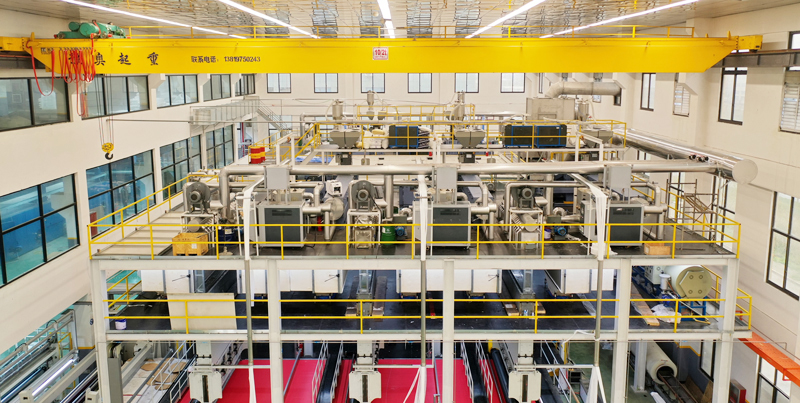
Answering key operations, logistics, and planning queries to help you execute your industrial project in Lesotho.
The space requirements depend on the configuration (e.g., S, SS, or SMS). An S line requires a building height of around 11–12 meters for vertical aerodynamic drawing chambers. The overall footprint ranges from 30 meters to 50 meters in length and 15 to 20 meters in width. HG provides layout drawings beforehand to allow proper architectural planning.
High altitudes lead to lower atmospheric pressure, which affects cooling air flow and polymer quenching speed. Our customized air intake fans utilize variable frequency drives (VFDs) to maintain a higher static pressure, compensating for low ambient air density to ensure proper cooling rate and fiber drawing.
The core material is virgin Polypropylene (PP) chips with a Melt Flow Rate (MFR) of 25–40 g/10min. PP chips are widely manufactured and easily distributed in Southern Africa, with local supplies readily procurable out of petrochemical operations in South Africa.
A typical turnkey setup takes approximately 45 to 60 days on-site. This includes machinery positioning, electrical calibration, test runs, and hands-on staff training. Our veteran engineering team remains on site until your personnel can operate the entire line autonomously.
We provide a 24-month warranty period on all major structural components, complemented by an integrated Industrial IoT remote diagnosis kit. This allows our control room to remotely troubleshoot PLC settings, modify parameters, and guide your team without physical delays.
 HG NONWOVEN